
Classroom Discipline Without Punishment: What Actually Works
Loss of attention is named as the most common discipline problem in Moroccan EFL classrooms. Here's how to hold a room without shouting, punishing, or losing your energy by lesson three.
 By My Teacher
·
August 9, 2026
·
6 min read
By My Teacher
·
August 9, 2026
·
6 min read

Discipline in a room of 40-plus teenagers doesn’t hold together because you’re strict. It holds together because your responses are predictable, calm, and consistent — three things shouting has never once achieved.
This isn’t a call to abandon consequences. It’s a shift in where most of your energy goes: from reacting loudly after something goes wrong, to preventing it, and responding to what does happen without losing the room’s trust in the process.
What the research actually says
Loss of attention is identified as the most common disciplinary problem in Moroccan EFL classrooms — and studies specifically link consistent use of non-verbal cues and “withitness” (a teacher’s visible awareness of the whole room) to fewer disruptions than reactive, verbal correction.
Why Punishment-Based Discipline Backfires in Large Classes
Punishment works on the student it’s aimed at — sometimes. What it doesn’t do in a room of 45 is scale. Every public punishment costs you class time, costs the punished student face in front of peers, and teaches the other 44 students that your attention is earned through disruption, not participation. Prevention and calm, consistent response cost far less and hold up over a full year, not just one lesson.
Prevention: Stop Problems Before They Start
1. Stand where you can see everyone, always
“Withitness” — visibly knowing what’s happening across the whole room, not just where you’re currently standing — is one of the most consistently cited factors in effective classroom management. Avoid turning your back to write for long stretches, and position yourself so no corner of the room feels unwatched.
2. Give the room something to do the second they arrive
The two minutes between students entering and the lesson actually starting is where most avoidable disorder begins. A short warm-up task on the board, ready before they walk in, removes that dead time entirely.
3. Decide your responses before you’re angry
Reacting to disruption in the moment, without a plan, tends to produce inconsistent, mood-dependent discipline — which students notice and exploit faster than almost anything else. Decide in advance exactly what happens for talking during instructions, for lateness, for refusing a task, and apply it the same way every time, regardless of how your day is going.
Consistency beats severity
A predictable, moderate consequence applied every single time is more effective than a harsh one applied inconsistently — students adapt to patterns, not intentions.
In-the-Moment Responses That Don’t Escalate
4. Use proximity before you use your voice
Simply walking toward a disruption while continuing to teach resolves the vast majority of minor issues without a single word exchanged, and without interrupting the lesson for anyone else.
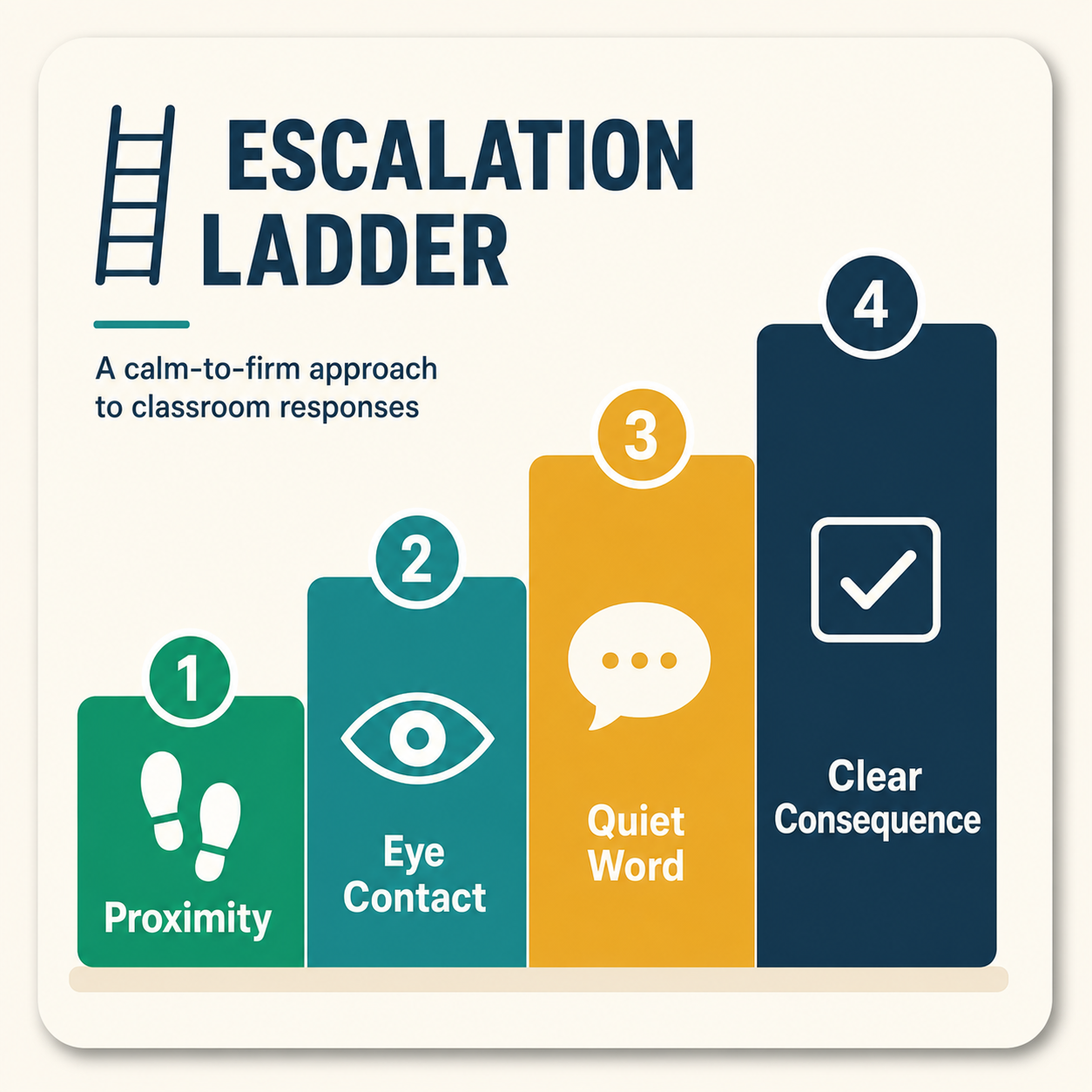
5. Name the behavior, not the student’s character
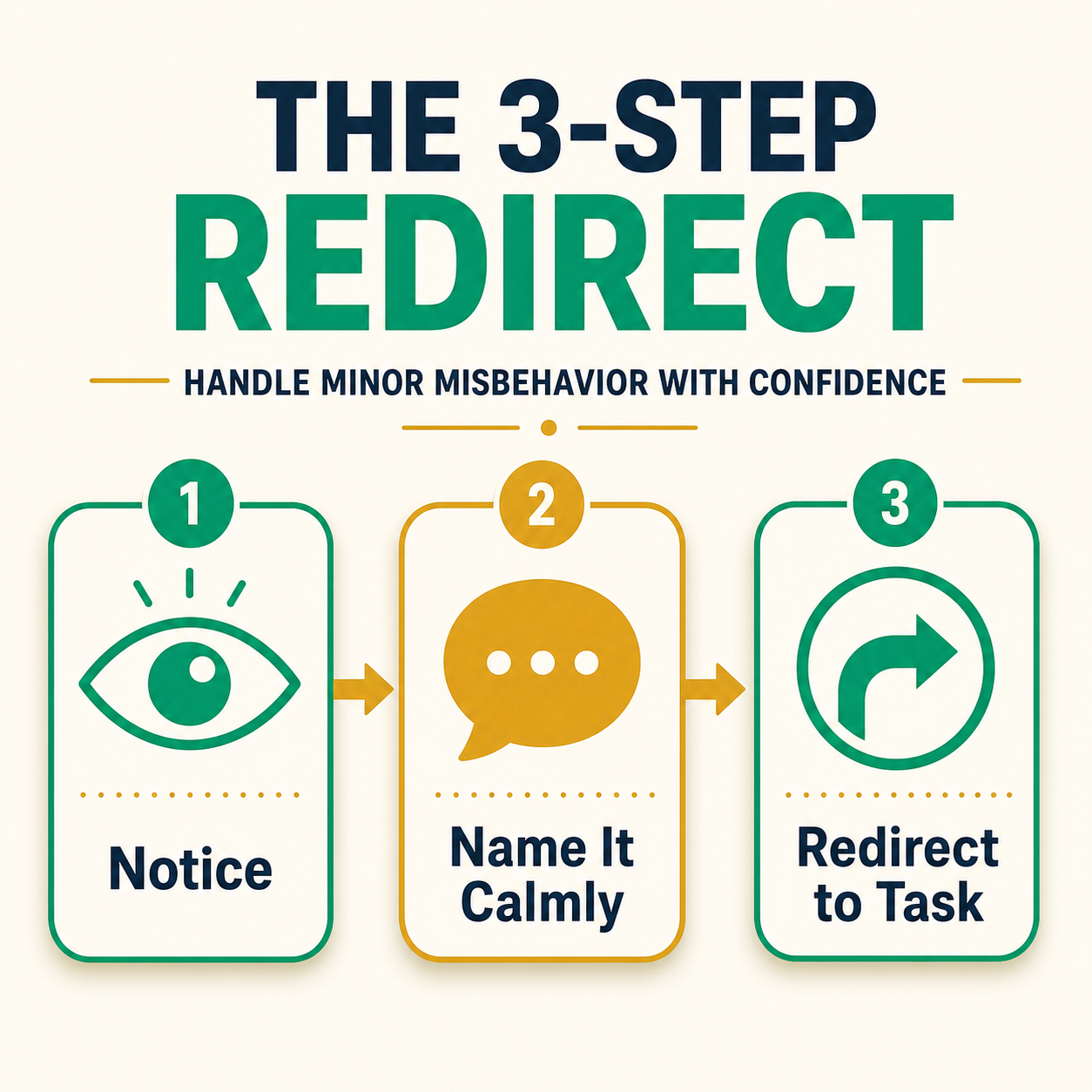
“Talking while I’m giving instructions” describes what happened. “You’re always disruptive” describes who you think they are — and it’s the version students remember, resent, and eventually live up to. Correct the action, not the identity.
6. Redirect to the task, not just away from the behavior
“Stop talking” removes a behavior but gives nothing to do instead. “Stop talking, you should be on question two” removes the behavior and hands back a clear next step — which resolves the actual disruption: disengagement.
Consistent Consequences Without Shouting
7. Use a calm, quiet voice for correction — always
Raising your voice to be heard over noise teaches a room that shouting is the trigger for quieting down, which trains them to wait for it. A consistently calm, lower voice for correction — even paired with a firm consequence — keeps you the steady point in the room rather than another source of noise.
8. Apply the same consequence regardless of who it is
Inconsistent enforcement, even when well-intentioned (“she’s usually good, I’ll let it go this once”), is what most reliably breaks down classroom order in large groups — students track fairness closely, and perceived unfairness invites far more testing of boundaries than the original behavior ever did.
9. Follow through the first time, every time
A stated consequence that isn’t enforced the first time it’s needed effectively announces that your rules are negotiable. It costs more upfront to follow through consistently — it costs far more over a year not to.
Building Long-Term Respect, Not Just Compliance
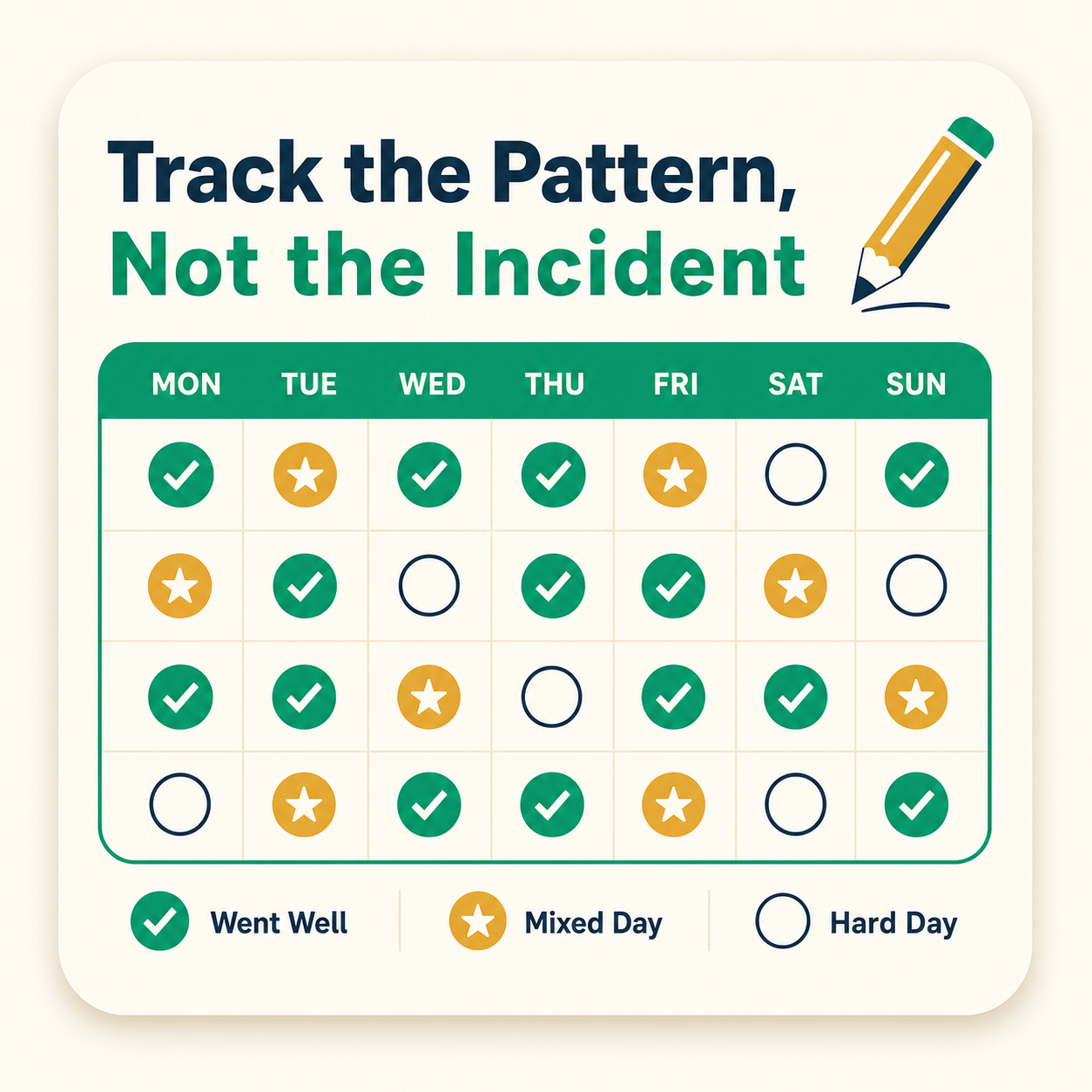
10. Track patterns, not just incidents
A single bad lesson from an otherwise engaged student rarely needs escalation. A pattern across several weeks does. Keeping even a simple, private record of who struggles and when helps you respond to the actual pattern rather than reacting fresh to each individual moment.
11. Acknowledge improvement out loud
Students who’ve been consistently corrected rarely hear when they get it right. A brief, specific acknowledgment — “much better focus today” — costs nothing and does more for long-term behavior than another round of correction ever will.
Where this fits into your existing records
If you’re already tracking assessment for your classes, the Teacher Bundle‘s grade sheets include a dedicated discipline mark alongside participation, homework and notebook — built around the Moroccan marking system — so behavior patterns are already part of your termly record rather than something separate to maintain.
Putting It Together
None of this requires a stricter personality or louder voice — it requires a small set of calm, consistent responses applied the same way every time, and enough visible awareness of the room to catch most issues before they need any response at all. Start with proximity and a genuinely calm correcting voice; those two changes alone reshape how a room responds to you within a couple of weeks.
Positive discipline focuses on prevention, consistency, and calm redirection rather than punishment after the fact. It works well in large classes specifically because it doesn’t rely on a teacher’s ability to punish every disruption individually — instead it reduces how often disruption happens in the first place through routine and predictability.
Use proximity first — simply walking toward the issue while continuing to teach — followed by a calm, quiet correction that names the behavior and redirects to the task. Reserve formal consequences for behavior that continues after these lower-key steps, and apply them consistently every time.
Prevention-focused strategies scale best: visible “withitness” (positioning yourself to see the whole room), a ready task the moment students enter, and pre-decided, consistently applied responses to common issues like lateness or talking during instructions. These reduce how often you need to intervene at all.
A simple, private, ongoing record — even a basic checklist — of who struggles and when lets you respond to genuine patterns rather than reacting fresh to every single incident. Many teachers fold this into their existing grading or assessment records rather than keeping it entirely separate.
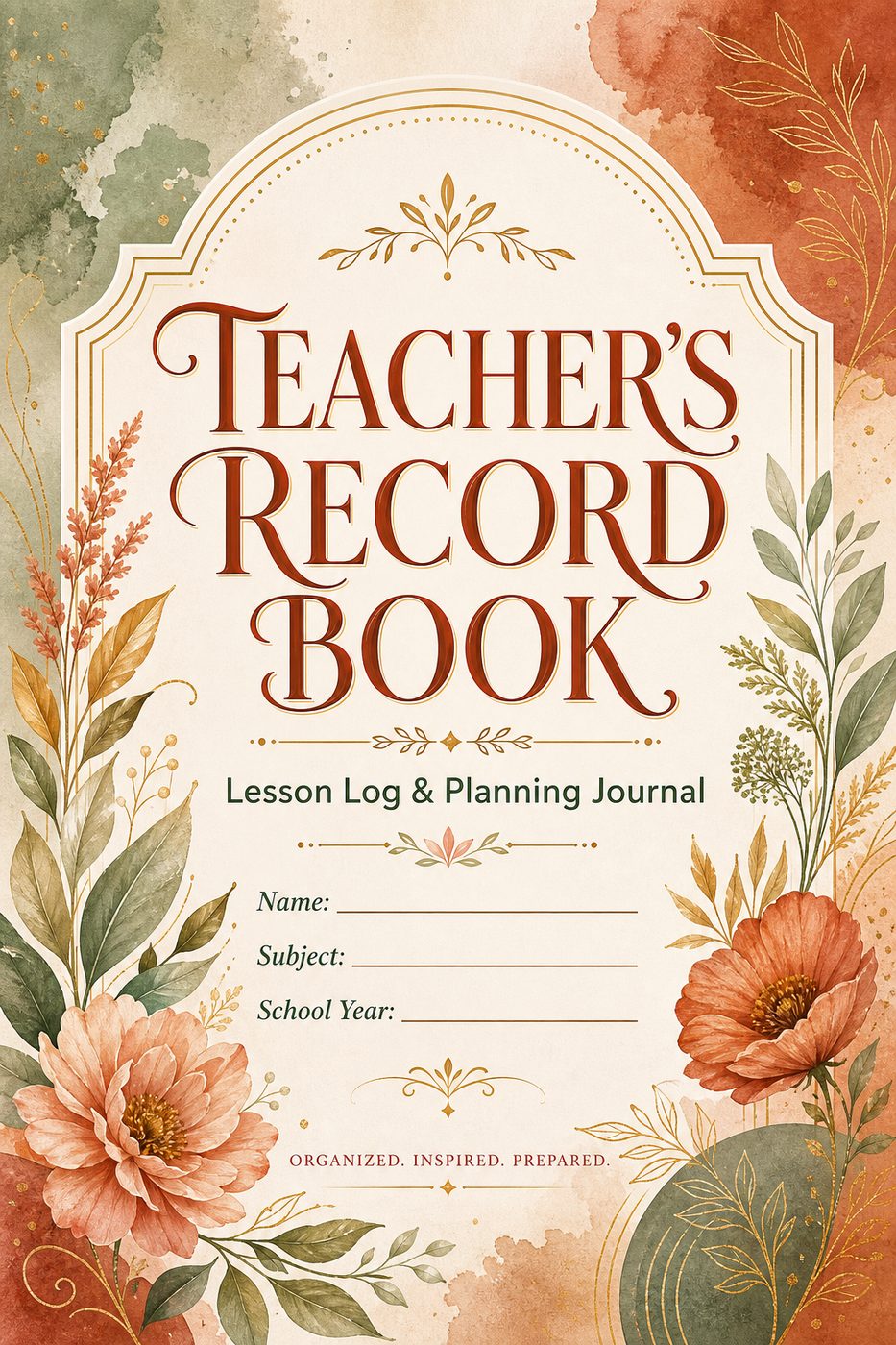
The Teacher Bundle
A complete Record Book, Tracker, and bonus Lesson Planner — everything to plan, teach, and track your school year in one beautiful set.
Discover The Teacher Bundle →
Scan with your phone camera, then tap "Install" on the site to add it to your home screen.
Or open myteacher.ma on your phone