
The ESA Method (Engage, Study, Activate): A Beginner’s Guide for New EFL Teachers
A clear explanation of the ESA method (Engage, Study, Activate) for new EFL teachers — what each stage actually means, and how to apply it to a real lesson.
 By My Teacher
·
August 13, 2026
·
5 min read
By My Teacher
·
August 13, 2026
·
5 min read

If you’ve spent any time around Moroccan EFL lesson plans, you’ve almost certainly seen the letters “ESA” referenced — usually assumed as background knowledge rather than actually explained. It’s genuinely one of the most widely used lesson structures in English teaching, and once it clicks, it becomes the default shape almost every good lesson naturally takes.
This is the explanation that usually gets skipped: what ESA actually means, and how to build a real lesson around it.
Where ESA comes from
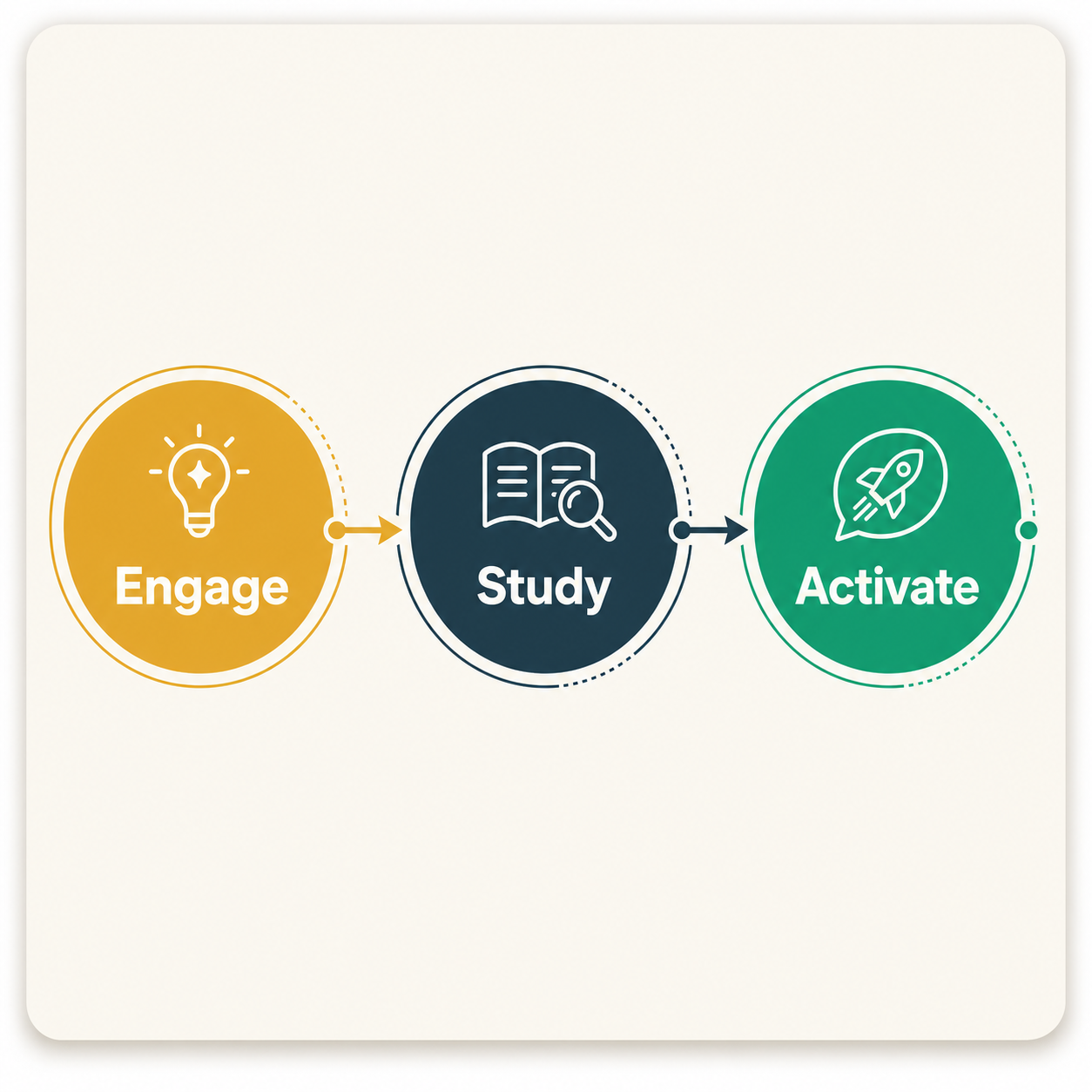
ESA — Engage, Study, Activate — is a lesson structure developed by ELT methodologist Jeremy Harmer as a flexible alternative to older, more rigid lesson models, and it’s since become one of the most widely taught frameworks in EFL teacher training worldwide.
The Three Stages
Engage
The opening stage — its only job is to get students emotionally and mentally involved before any teaching happens. This is your warm-up: a question, a picture, a short discussion, something genuinely interesting enough to shift attention away from whatever happened before class and toward English.
Study
The stage where new language is introduced and examined closely — a grammar structure, a set of vocabulary, a function. This is where accuracy matters most: students are focused on understanding exactly how the language works, often through guided practice, explanation, and controlled exercises.
Activate
The stage where students use the language more freely, in something closer to real communication — a discussion, a role-play, a piece of writing. Accuracy matters less here than fluency; the goal is genuine use, not perfect use.
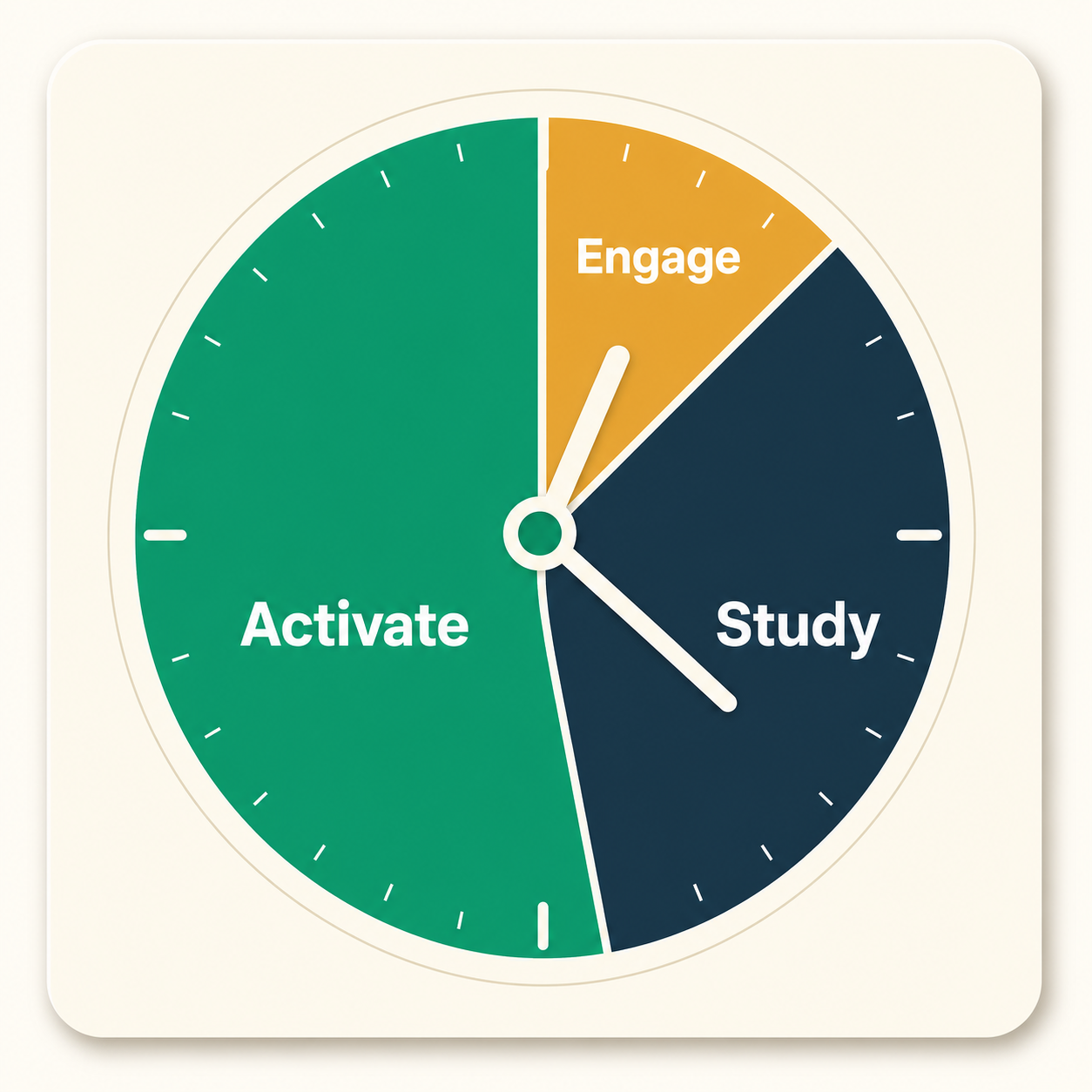
Study and Activate usually need more time than Engage
Engage should be short and energizing — a few minutes is enough. Study and Activate are where the real learning and real practice happen, and they should take up the majority of your lesson time between them.
Why the Order Matters
ESA isn’t just a label for three activity types — the sequence itself is the point. Trying to Activate language students haven’t Studied yet leads to error-filled, frustrating production. Spending an entire lesson on Study without ever reaching Activate leaves students knowing the rule but unable to actually use it. The three stages, in this order, are what turns “knowing about” a structure into “being able to use” it.
ESA in a Real Lesson
Take a lesson on the passive voice as a concrete example.
Engage
Show a short news-style headline like “New Bridge Built in Record Time” and ask students who they think did the building — most won’t know, which naturally sets up why the passive voice exists in the first place.
Study
Introduce the passive voice structure directly, work through several example sentences on the board, and have students complete controlled practice exercises — transforming active sentences into passive ones.
Activate
Have students write a few sentences describing something in their own school or town using the passive voice — a new library “was built,” a road “is being repaired” — genuine, freer use of the structure they just studied.
This pairs naturally with a standard lesson plan format
ESA maps cleanly onto the five-part lesson plan format most Moroccan teachers already use — Engage becomes your Warm-Up, Study becomes your Presentation and guided Procedure, and Activate becomes your Production stage.
Putting It Together
ESA isn’t a rigid formula to follow exactly the same way every time — some lessons need more Study, some need barely any Engage at all if the topic is already gripping. What stays constant is the underlying logic: get students interested, teach the language clearly, then let them actually use it. Once that becomes automatic, planning genuinely gets faster.
Every lesson in the Smart English Worksheets Complete Pack and Teacher Bundle is built around this exact structure, if you’d like to see it applied consistently across a full set of ready-made lessons.
Engage, Study, Activate — a three-stage lesson structure where Engage gets students interested, Study introduces new language accurately, and Activate lets students use that language more freely.
It was developed by ELT methodologist Jeremy Harmer as a flexible alternative to more rigid, traditional lesson structures.
The core logic (interest before instruction, instruction before free use) generally holds, but the amount of time spent on each stage should vary based on the lesson — some topics need very little Engage, others need much more Study time before students are ready to Activate.
ESA’s three stages map naturally onto a typical lesson plan’s sections — Engage corresponds to the Warm-Up, Study to the Presentation and guided Procedure, and Activate to the Production stage.
The Teacher Bundle
A complete Record Book, Tracker, and bonus Lesson Planner — everything to plan, teach, and track your school year in one beautiful set.
Discover The Teacher Bundle →
Scan with your phone camera, then tap "Install" on the site to add it to your home screen.
Or open myteacher.ma on your phone