
How to Finish the Syllabus On Time: A Pacing Guide for Moroccan English Teachers (Common Core to 2nd Bac)
Ten units, a fixed exam date, and far fewer real teaching weeks than the calendar suggests. Here's a practical pacing system for actually finishing the Moroccan English syllabus on time — without cutting corners on what matters.
 By My Teacher
·
August 9, 2026
·
7 min read
By My Teacher
·
August 9, 2026
·
7 min read
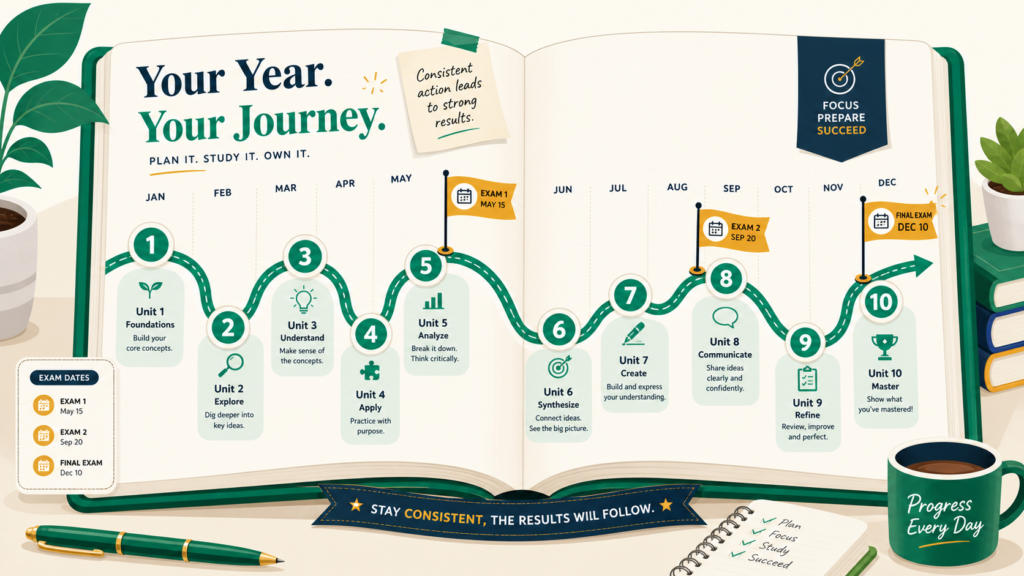
Ten units. A fixed national or regional exam date that doesn’t move for anyone. And a school calendar that looks generous on paper until you subtract every holiday, exam week, orientation day, and the two lessons at the start of the year nobody actually teaches anything in.
“The syllabus is too long for the time available” is one of the most consistently repeated complaints in Moroccan EFL teaching — and it’s rarely really about the syllabus. It’s about pacing against a school year that has far fewer real teaching weeks than the calendar suggests.
A recurring complaint, not just your experience
Overwhelming curriculum load and the number of units to cover per semester is repeatedly named as a major frustration among Moroccan English teachers — with many describing the syllabus as too dense for the realistic teaching time available.
Why Moroccan Teachers Fall Behind the Syllabus
Two things happen almost every year. First, teachers plan against the full academic calendar rather than the real number of teaching weeks left once holidays, exam periods, and inevitable interruptions are subtracted. Second, early units get more time than they need — because the year still feels long — leaving far too little time for the last two or three units before the exam.
Map Your Real Teaching Weeks Before the Year Starts
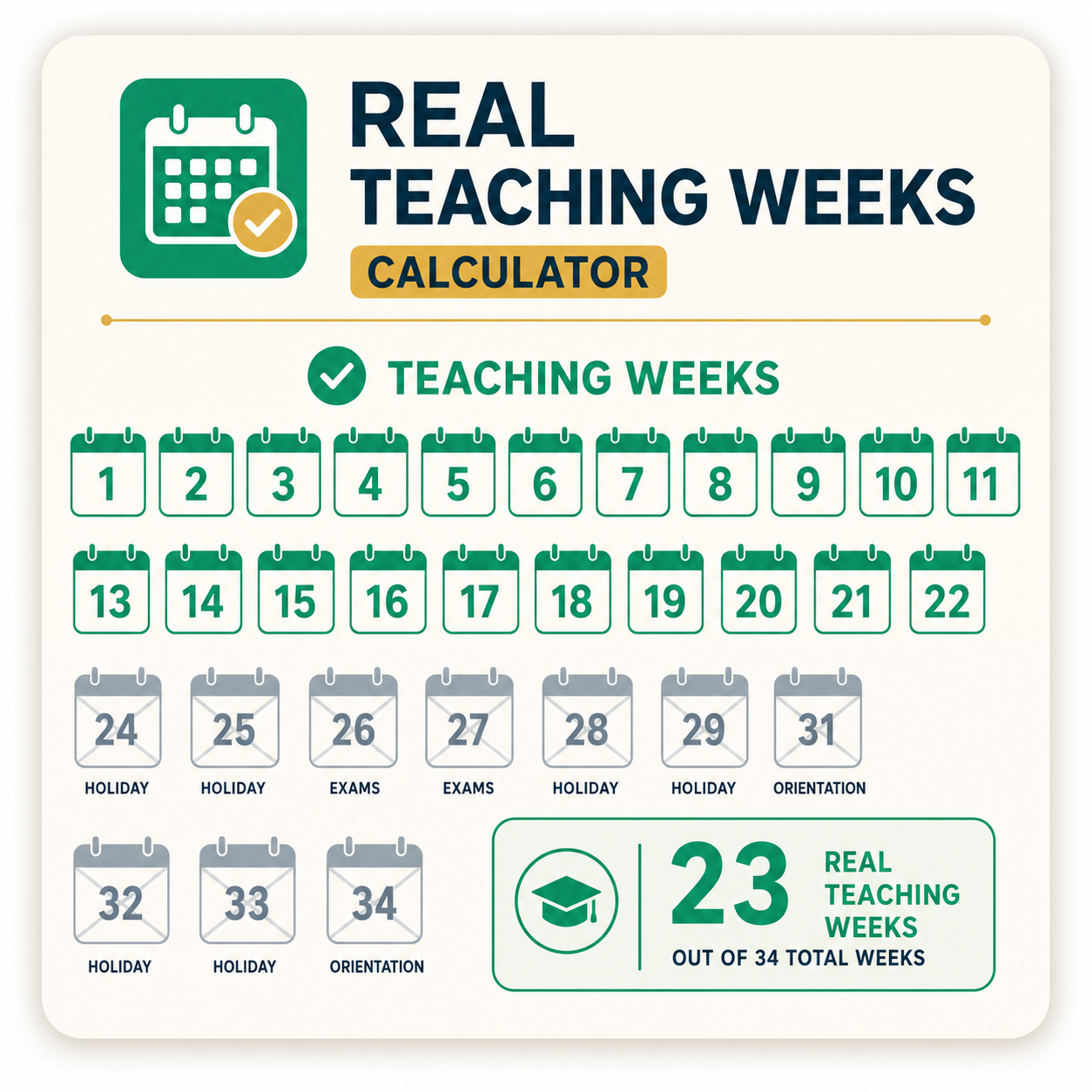
1. Count actual teaching weeks, not calendar weeks
Before assigning any time to any unit, subtract every known holiday, exam period, and orientation week from the official calendar. A “34-week year” often turns out to be closer to 24-26 real teaching weeks once you do this — and planning against the honest number, not the optimistic one, is what prevents the year-end scramble.
2. Work backward from your exam date, not forward from day one
Start with the exam date and count backward to determine your true deadline for finishing content, leaving at least one to two weeks purely for review before the exam. Planning forward from September tends to make the final units feel rushed no matter how well-intentioned the pacing was.
3. Give each unit a fixed number of sessions and stick to it
Assign a set number of lessons per unit — for example, six sessions covering vocabulary, grammar, functions, reading, writing, and review — before the year starts, rather than deciding lesson by lesson how long a unit “needs.” A fixed budget is what actually prevents an interesting unit from quietly eating into the time reserved for later ones.
Where Time Actually Gets Lost
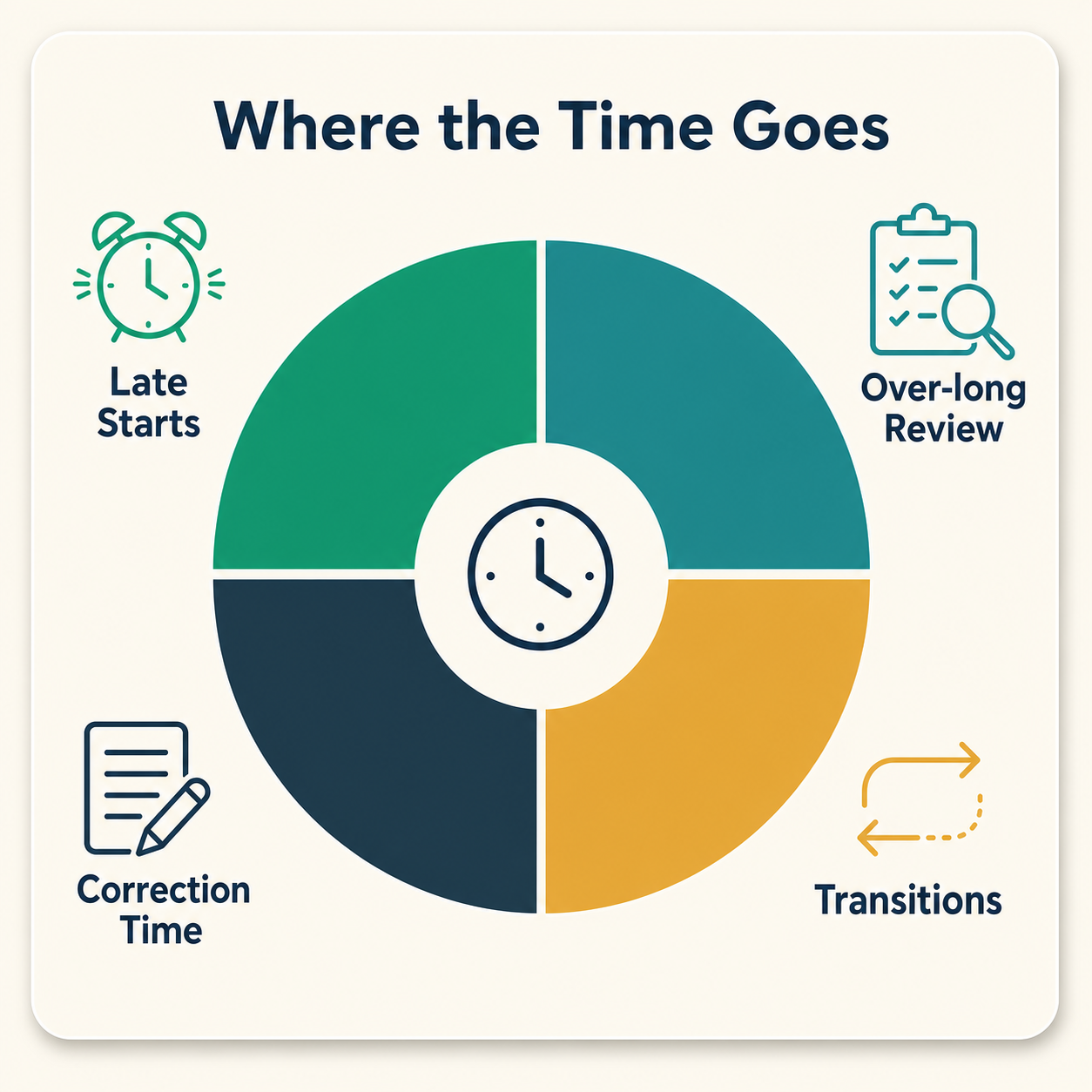
Falling behind rarely happens all at once — it happens in small, repeated losses that add up across the year.
4. Late starts and slow transitions
Two or three minutes lost at the start of every lesson, multiplied across a full year of sessions, adds up to several entire lost class periods. A ready warm-up task on the board the moment students arrive recovers most of this automatically.
5. Over-long review of previous material
Reviewing the last lesson for ten minutes at the start of every class feels responsible, but it quietly consumes almost a quarter of your teaching time over a term. A tight, two-minute recap — one question, choral answer — usually achieves the same purpose.
6. Correction that happens live, for everyone, every time
Going over every single answer to every single exercise with the whole class, every lesson, is one of the most common quiet time-drains in a Moroccan English classroom. Spot-checking a few answers, or using a quick answer key students self-check against, recovers meaningful time without sacrificing accuracy feedback.
Speeding Up Without Cutting Corners
7. Reuse the same lesson structure every time
A fixed, familiar lesson shape — warm-up, presentation, practice, production — means you spend zero time each week reinventing how a lesson flows, and students spend zero time each week relearning what’s expected of them.
8. Trim optional extension activities for classes already behind
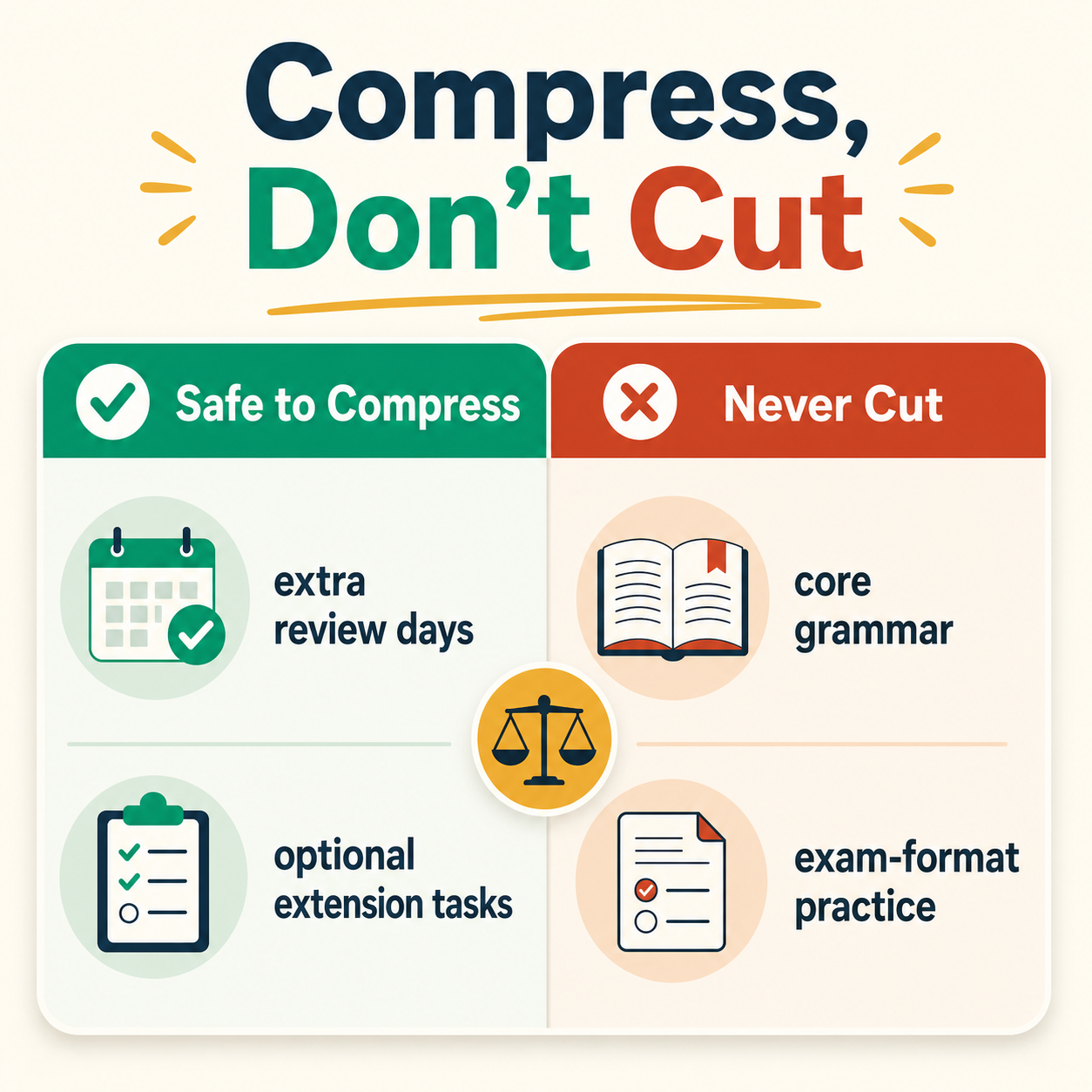
“Your Turn” extension tasks and enrichment activities are valuable, but they’re also the safest thing to compress when time is tight — unlike core grammar or exam-format practice, cutting them doesn’t put students at a disadvantage on exam day.
9. Batch your marking instead of correcting after every single lesson
Reviewing and marking work in scheduled batches — say, twice a week rather than nightly — recovers planning time that otherwise disappears into piecemeal correction, without reducing how much feedback students actually receive.
What To Do When You’re Already Behind
10. Compress, don’t cut, whenever possible
If you’re behind, look first for units or sections that can be taught in fewer sessions rather than units that can be skipped entirely — skipping content students will be tested on is a far worse outcome than teaching it more briskly than planned.
11. Recalculate your remaining weeks honestly, and often
Revisit your real teaching-weeks count every few weeks rather than only at the start of the year — unplanned closures and disruptions happen, and adjusting early gives you far more options than discovering the shortfall in the final month.
Where this becomes far less manual
The Teacher Bundle‘s Record Book includes a yearly pacing guide for exactly this — Common Core, 1st and 2nd Year Bac — with the Moroccan academic calendar’s holidays and exam periods already marked, so the “real teaching weeks” calculation above is already done for you rather than something to build from scratch each September. And since all 60 lessons in the Smart English Worksheets Complete Pack are pre-built and cross-verified against your textbook, unit-by-unit prep time — one of the biggest hidden pacing drains — drops considerably. A few sample lessons are free to try first in the Worksheet Library.
Putting It Together
Falling behind the syllabus is almost never about teaching too slowly — it’s about planning against an idealized calendar instead of the real number of teaching weeks available, and losing small amounts of time in the same places, lesson after lesson. Count your real weeks honestly at the start of the year, protect that count with a fixed structure, and when you do fall behind, compress rather than cut.
The Textbook Directory can also help you find material already matched to your exact level and textbook, so you’re not building pacing plans around content you’ll need to adapt later.
Two main reasons come up repeatedly: planning against the full academic calendar rather than the real number of teaching weeks once holidays and exams are subtracted, and spending too much time on early units while the year still feels long, leaving too little time for the final units before the exam.
It varies by school and year, but after subtracting holidays, exam periods, and orientation time from an official calendar of around 34 weeks, many teachers find their real teaching weeks closer to 24-26. Calculating this honestly at the start of the year, rather than assuming the full calendar is available, is the single most useful pacing step.
Optional extension and enrichment tasks are the safest to compress or trim, since they’re not typically what students are tested on. Core grammar instruction and exam-format practice should be the last thing touched — compress the number of sessions a unit takes before ever considering skipping tested content.
Work backward from your exam date to set a true deadline, assign each unit a fixed number of sessions in advance rather than deciding as you go, and recalculate your remaining real teaching weeks every few weeks rather than only once in September.
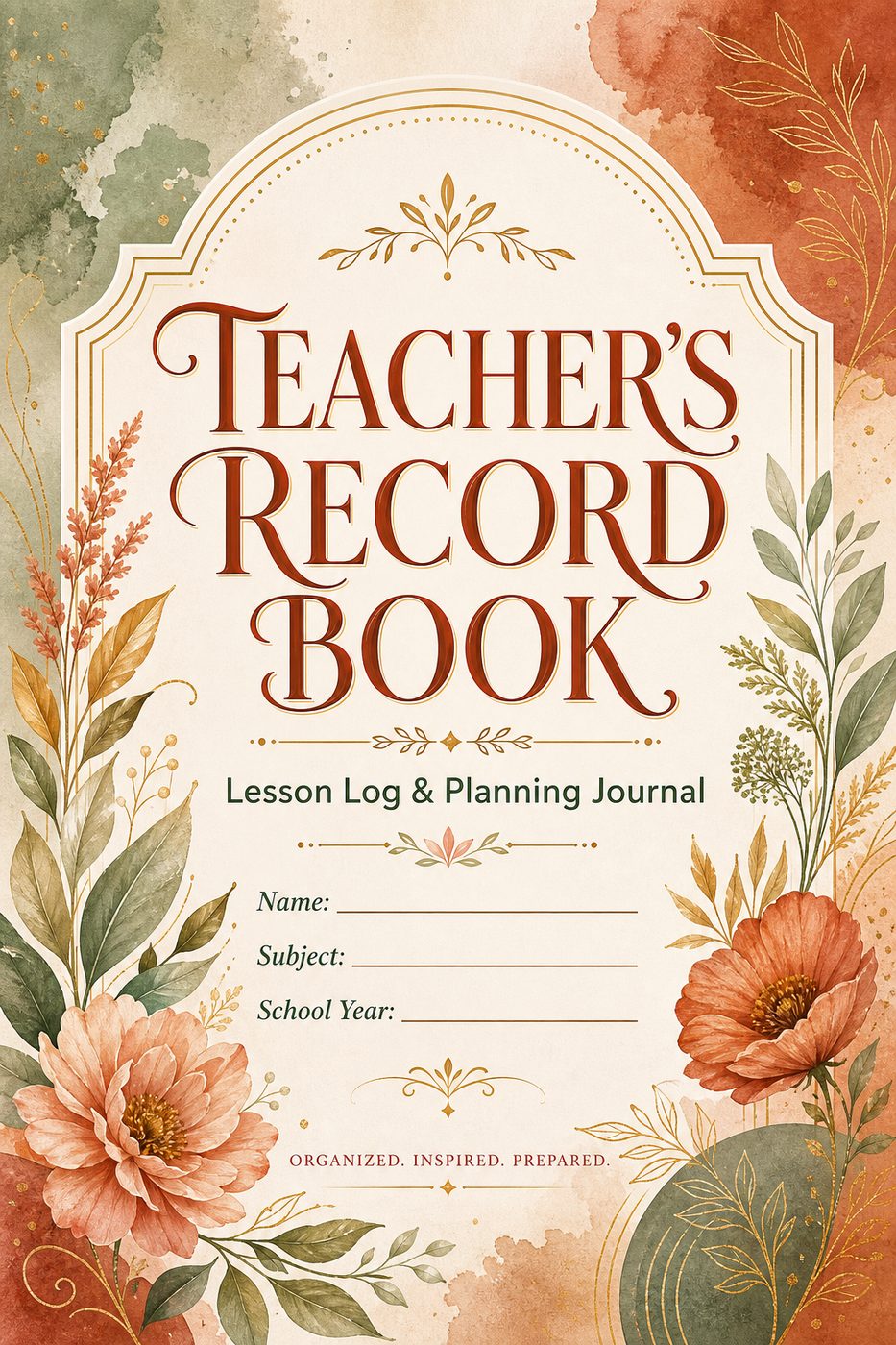
The Teacher Bundle
A complete Record Book, Tracker, and bonus Lesson Planner — everything to plan, teach, and track your school year in one beautiful set.
Discover The Teacher Bundle →
Scan with your phone camera, then tap "Install" on the site to add it to your home screen.
Or open myteacher.ma on your phone