
How to Get Silent Students Talking: Speaking Activities for Shy, Low-Level Learners
A silent classroom isn't a discipline problem — it's usually a confidence problem. Here are low-pressure, practical ways to get shy, low-level Moroccan students speaking English, without putting anyone on the spot.
 By My Teacher
·
August 9, 2026
·
7 min read
By My Teacher
·
August 9, 2026
·
7 min read

Every English teacher in Morocco knows this room: hands down, eyes on desks, and a silence that stretches a few seconds too long after every question. It’s not usually defiance, and it’s rarely laziness — it’s fear of getting it wrong, in front of 40 classmates, in a language that still feels foreign.
Getting these students talking isn’t about finding a clever activity. It’s about lowering the risk of speaking until it feels small enough to take.
Why this happens so often
Moroccan EFL research repeatedly describes students as passive participants who rarely engage voluntarily in spoken English — a pattern linked less to ability and more to fear of error, exam-focused habits, and limited confidence built up over years of grammar-translation instruction.
Why Moroccan Students Go Silent in English Class
Before the techniques, it helps to name what’s actually happening. Most silent students aren’t struggling with the language itself — they’re struggling with being watched while using it. Years of exam-focused, accuracy-graded English teaching can quietly teach students that a wrong answer spoken out loud is worse than no answer at all. The fix isn’t more pressure to speak. It’s less pressure around speaking.
Lower the Pressure Before You Ask for Language
1. Never ask for a first response cold
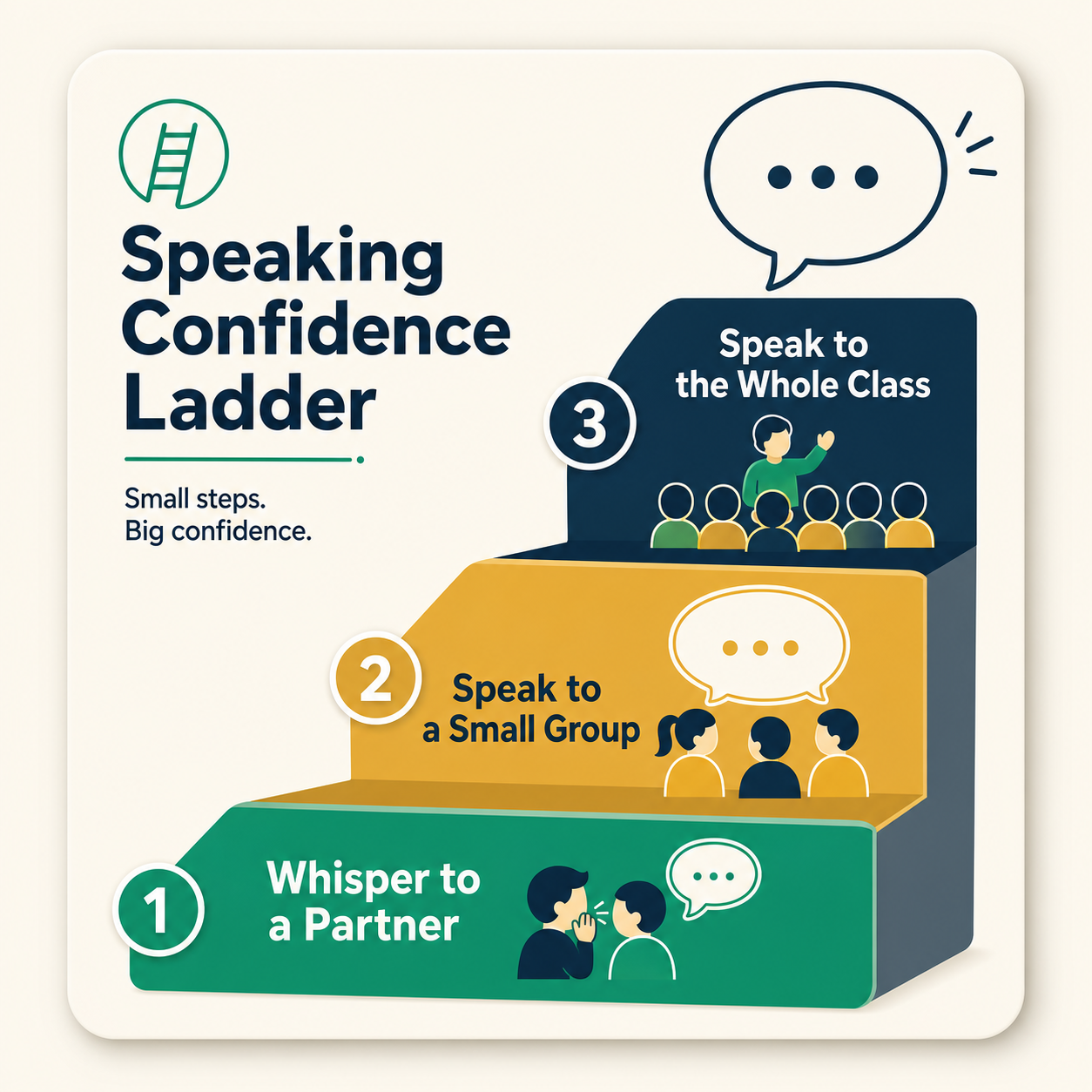
If the very first time a piece of language is spoken out loud is when you call on someone individually, you’ve set them up to fail in public. Always let students say the answer chorally, or rehearse it with a partner, before any individual is asked to repeat it alone.
2. Let students opt in, not be picked
Instead of “you, answer this” — try “who’s ready?” and wait. It feels like a small difference, but a raised hand is a choice, and a choice feels safe in a way that being singled out never does. Combine this with occasional cold-calling for accountability, but let volunteering be the default.
3. Rehearse before you perform
Give 30-60 seconds for students to say their answer quietly to a partner before anyone says it to the class. By the time they speak publicly, they’ve already said it once and survived — the second time is never as frightening as the first.
Structured Speaking That Doesn’t Require Confidence
Open-ended questions (“What do you think about…?”) are actually the hardest thing to answer in a foreign language — there’s no scaffold to lean on. Structure removes that barrier.
4. Give sentence starters for everything
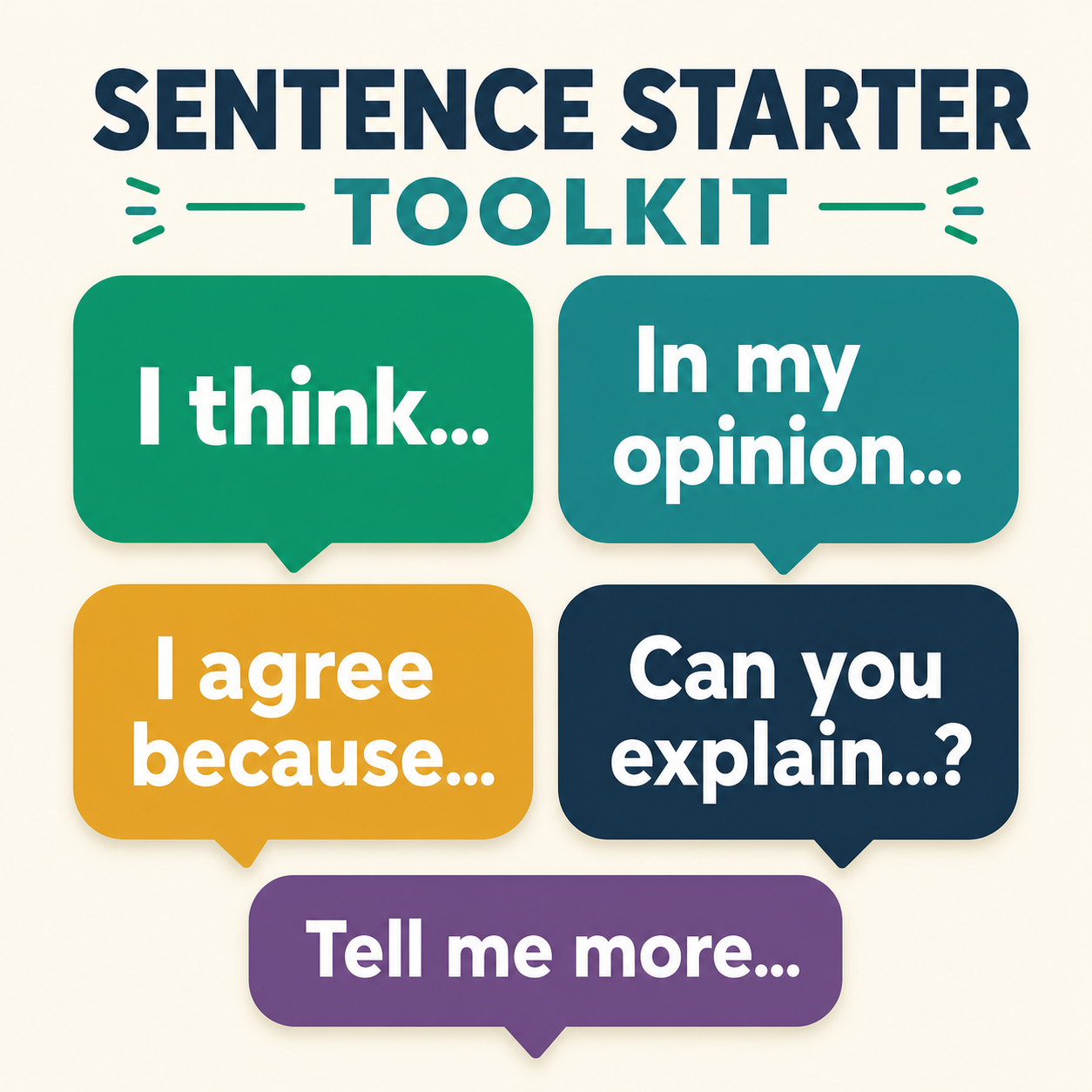
“I think…” “In my opinion…” “I agree because…” — even simple starters give students a launching point so they’re not building a sentence from nothing under pressure. Write 3-4 on the board before any discussion activity and watch participation rise immediately.
5. Use information-gap tasks, not open discussion
Give partner A information partner B doesn’t have, and require an exchange to complete a task — filling a chart, solving a puzzle, finding a difference between two pictures. Speaking becomes the mechanism for finishing the task, not the goal by itself, which quietly removes the spotlight from “performing” in English.
6. Read before you speak
For your weakest speakers, let them read a line aloud before improvising one. A student who can’t yet generate language from nothing can often still read it confidently — and reading aloud is a legitimate, lower-stakes first step toward free speech, not a lesser form of participation.
Getting Reluctant Speakers to Volunteer
7. Praise the language, not just the courage
“Good job speaking up” tells a shy student they were brave. “I like how you used ‘because’ to explain your reason” tells them they did something specific and correct. The second kind of praise builds real linguistic confidence, not just social courage — and it’s what makes a student want to speak again.
8. Normalize mistakes out loud, deliberately
Occasionally make a small, obvious mistake yourself and correct it in front of the class — “Oh wait, I said ‘goed,’ I mean ‘went.'” Seeing a teacher make and casually fix an error does more to lower the fear of speaking than any amount of saying “mistakes are okay.”
9. Give a genuine reason to speak, not just a prompt
“Tell your partner your opinion” is a prompt. “Find out if your partner agrees with you, then tell me who disagreed and why” is a reason — it gives the exchange a real purpose beyond compliance, and purposeful tasks pull more language out of reluctant speakers than open prompts do.
“Students consistently report far greater willingness to speak in pair or small-group formats than in whole-class settings — the audience size, not the task difficulty, is often the real barrier.”
— Common pattern in Moroccan EFL classroom research
Building Speaking Habits Over Weeks, Not One Lesson
No single activity turns a silent class into a talkative one. Speaking confidence is a habit built through repetition, the same way any skill is.
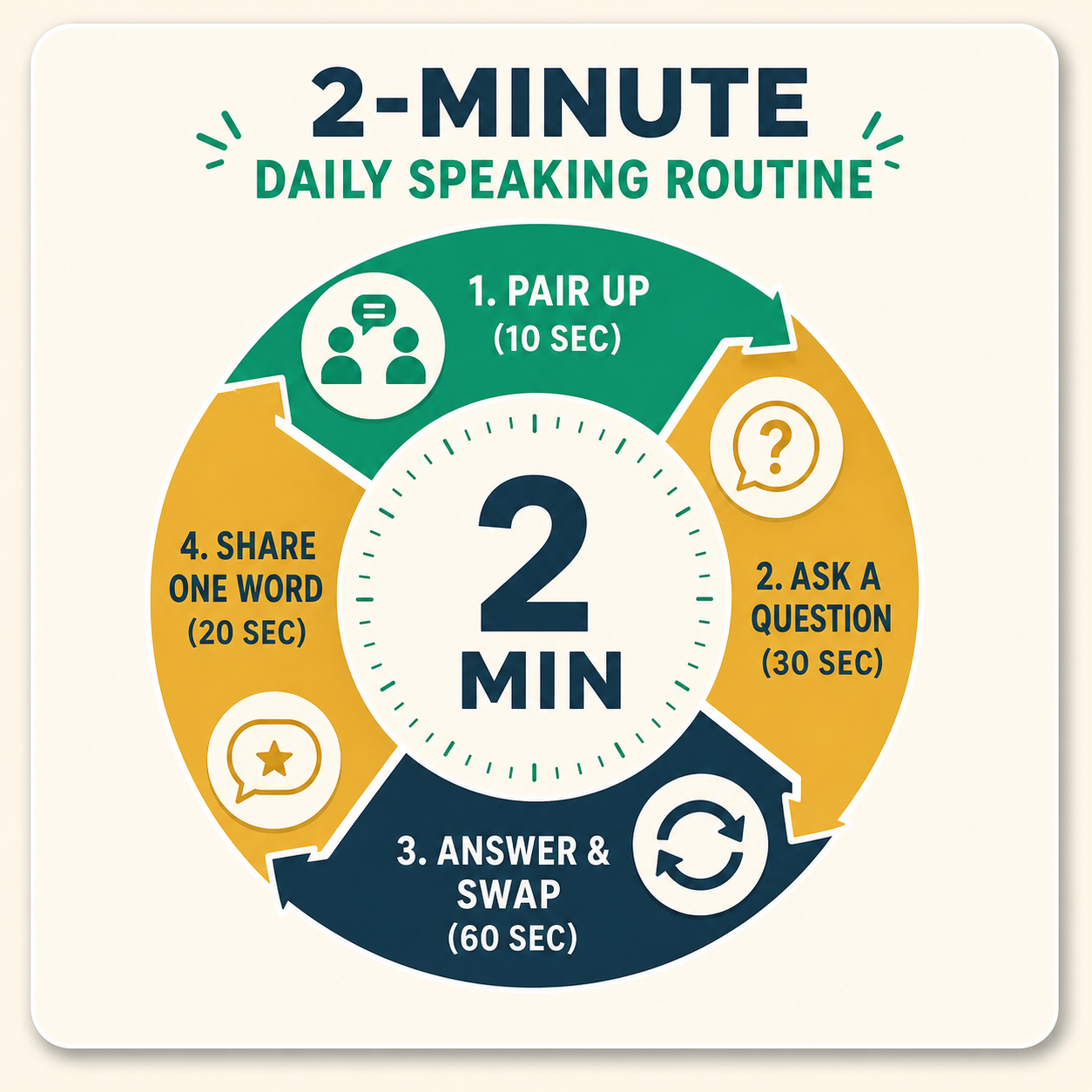
10. Run a 2-minute speaking routine every single lesson
A tiny, predictable speaking task at the start of every class — pair up, ask one question, answer, swap — builds the expectation that speaking happens today, every day, in a low-stakes and familiar format. Predictability itself lowers anxiety.
11. Track growth, not just accuracy
Note privately, over a term, which students have moved from never volunteering to occasionally raising a hand. That shift — not grammatical perfection — is the real win for a shy speaker, and it’s worth naming to the student directly when you see it.
Where extra practice material helps
The Functions worksheets inside the Smart English Worksheets Complete Pack are built specifically around this kind of scaffolded speaking practice — asking for opinions, agreeing and disagreeing, giving advice — each with a model exchange and a phrase bank before students are asked to produce anything themselves. A few sample lessons are free to try in the Worksheet Library. For students who want extra self-study practice with the same functional language, the Smart English visual study book includes dedicated Functions posters they can review at home.
Putting It Together
A quiet classroom usually isn’t telling you your students can’t speak English — it’s telling you speaking still feels risky to them. Lower the risk with rehearsal, structure, and predictable routines, and the silence tends to lift gradually rather than all at once. Start with just the 2-minute daily routine and sentence starters — those two alone change the texture of a lesson within a couple of weeks.
If you want ready-made speaking and functions lessons built around exactly this kind of scaffolding, the Textbook Directory can point you to material matched to your exact level and textbook.
It’s rarely about ability. Research on Moroccan EFL classrooms points to fear of making mistakes in front of peers, years of exam-focused and accuracy-graded instruction, and low confidence as the main drivers of passive, silent participation — not a lack of language knowledge.
Let students rehearse an answer with a partner before saying it to the whole class, use sentence starters so they’re not building language from nothing, and let volunteering be the default rather than cold-calling as the first option.
Partner rehearsal before whole-class sharing, a daily 2-minute pair-and-swap speaking routine, and information-gap tasks using material you already have all require zero extra preparation and work well even in classes of 40 or more.
It’s a gradual shift built through repetition rather than a single lesson — most teachers notice change over several weeks of consistent, low-stakes daily speaking routines, not from one standout activity.
The Teacher Bundle
A complete Record Book, Tracker, and bonus Lesson Planner — everything to plan, teach, and track your school year in one beautiful set.
Discover The Teacher Bundle →
Scan with your phone camera, then tap "Install" on the site to add it to your home screen.
Or open myteacher.ma on your phone