
Noisy Pair & Group Work: How to Run Activities in 45 Minutes Without Losing Control
Group work sounds like chaos the moment it starts — even when the discussion is genuinely on-topic. Here's how to structure pair and group activities so they stay productive, timed, and controlled in a 45-minute Moroccan classroom.
 By My Teacher
·
August 10, 2026
·
6 min read
By My Teacher
·
August 10, 2026
·
6 min read
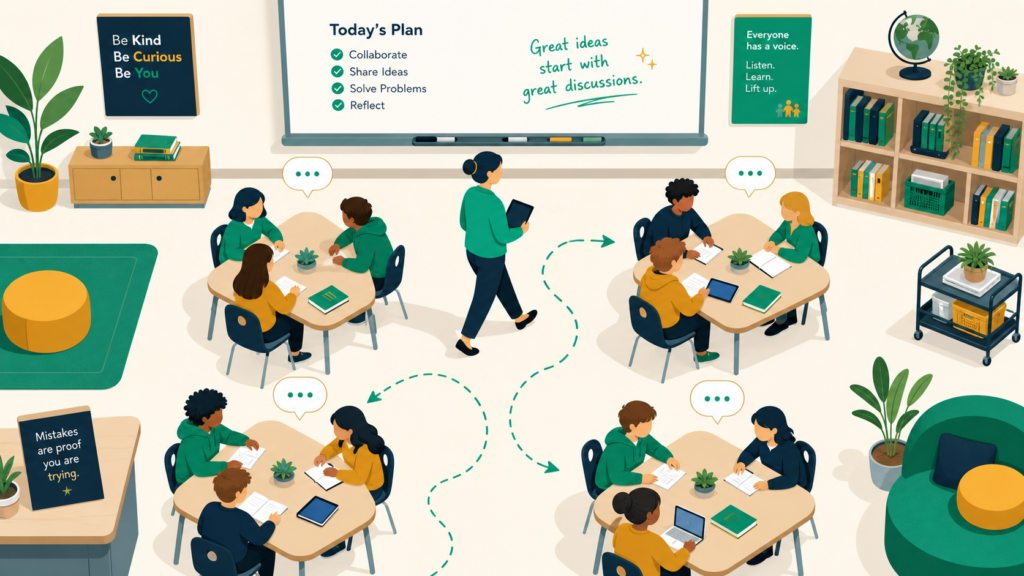
Group work is where a well-managed 45-minute lesson most often falls apart — not because the activity itself is bad, but because the moment students start talking simultaneously, the room sounds identical whether the conversation is on-topic or not. In a class of 40+, that ambiguity is exactly what erodes control fastest.
The fix isn’t avoiding group work. It’s designing the five minutes around it — before, during, and after — as carefully as the activity itself.
What actually causes the breakdown
Noise and loss of control during pair and group activities are specifically flagged as a barrier to communicative teaching in Moroccan EFL classrooms — not because group work is ineffective, but because monitoring 15 simultaneous conversations is inherently harder than monitoring one.
Set Up the Activity Before Anyone Starts Talking
1. Give every group task a physical, checkable output
“Discuss the topic” produces nothing you can verify from across the room. “Fill in this chart together” or “agree on three reasons and write them down” gives every group something concrete to produce — and a visible output is the fastest way to tell, at a glance, which groups are on task.
2. Explain the task fully before you form groups, not after
Once students are already seated with partners, attention drops immediately — that’s precisely when side conversations start. Give complete instructions to the whole class first, confirm understanding, and only then say “now, with your partner.”
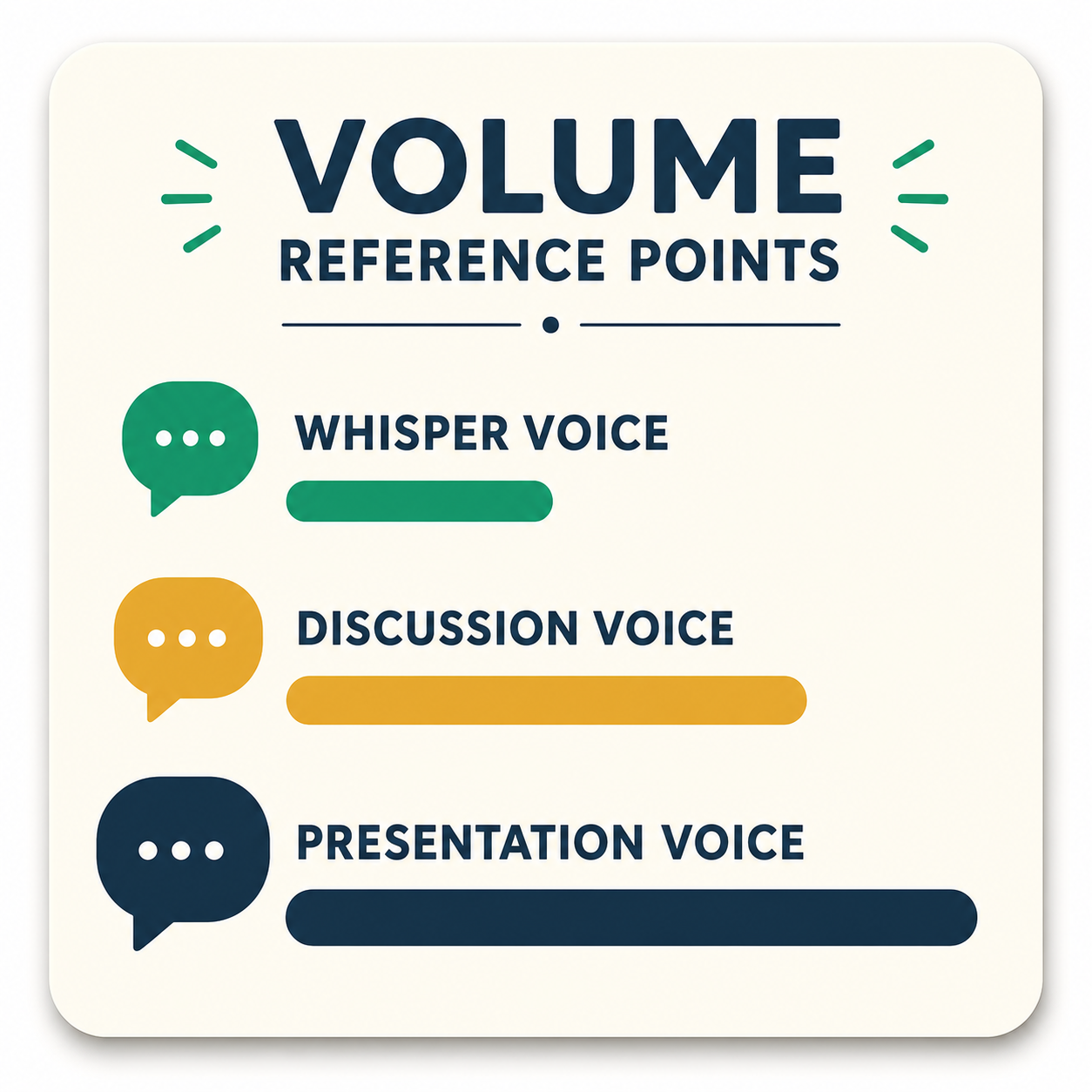
3. State the volume expectation as a concrete reference, not a word
“Quietly” means nothing specific to a room of teenagers. “Discussion voice — I should hear the pair next to you, not the pair across the room” gives an actual reference point students can self-monitor against.
Keep the Activity Timed and Contained
4. Use a visible countdown, never a spoken warning
A countdown timer projected, drawn on the board, or simply held up on your fingers gives students a visual sense of urgency that a spoken “two more minutes” rarely achieves once the room is already talking over itself.
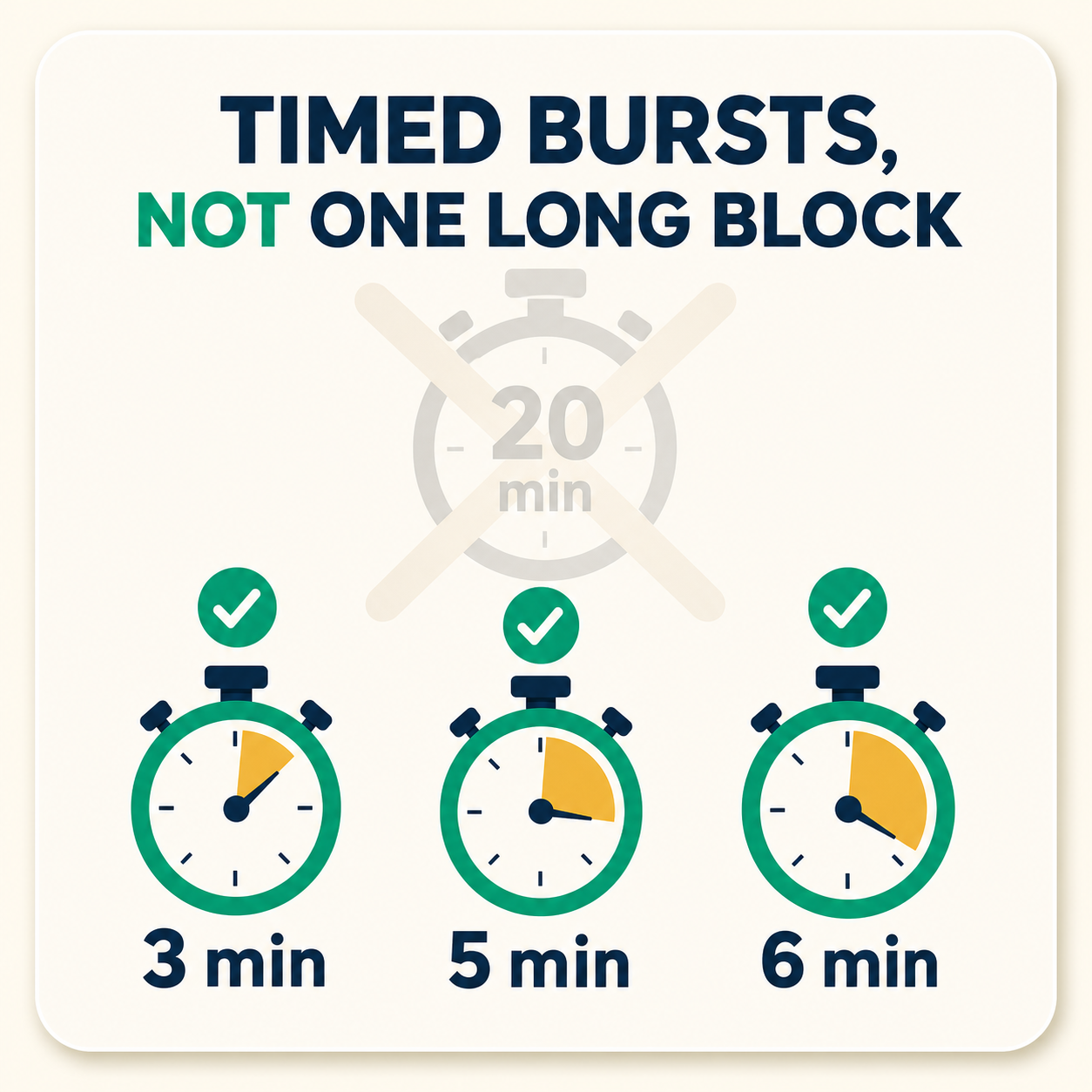
5. Keep group-work segments short and run more than one round
Longer blocks of unsupervised talk degrade into social chatter far faster than short ones — a 4-6 minute burst, followed by a quick share-out, then a second short round if needed, holds attention better than one uninterrupted 15-minute block covering the same material.
6. Use one stop signal, and only ever use it for stopping
A specific, consistent gesture or sound reserved only for “stop talking now” — never reused for other instructions — becomes an instant, reliable interrupt once trained, because students never have to guess what it means.
7. Assign a reporter role in each group
Naming one student per group responsible for reporting back keeps every group aware they may be called on, which measurably increases on-task focus compared to open-ended group discussion with no accountability built in.
Monitor Without Losing the Whole Room
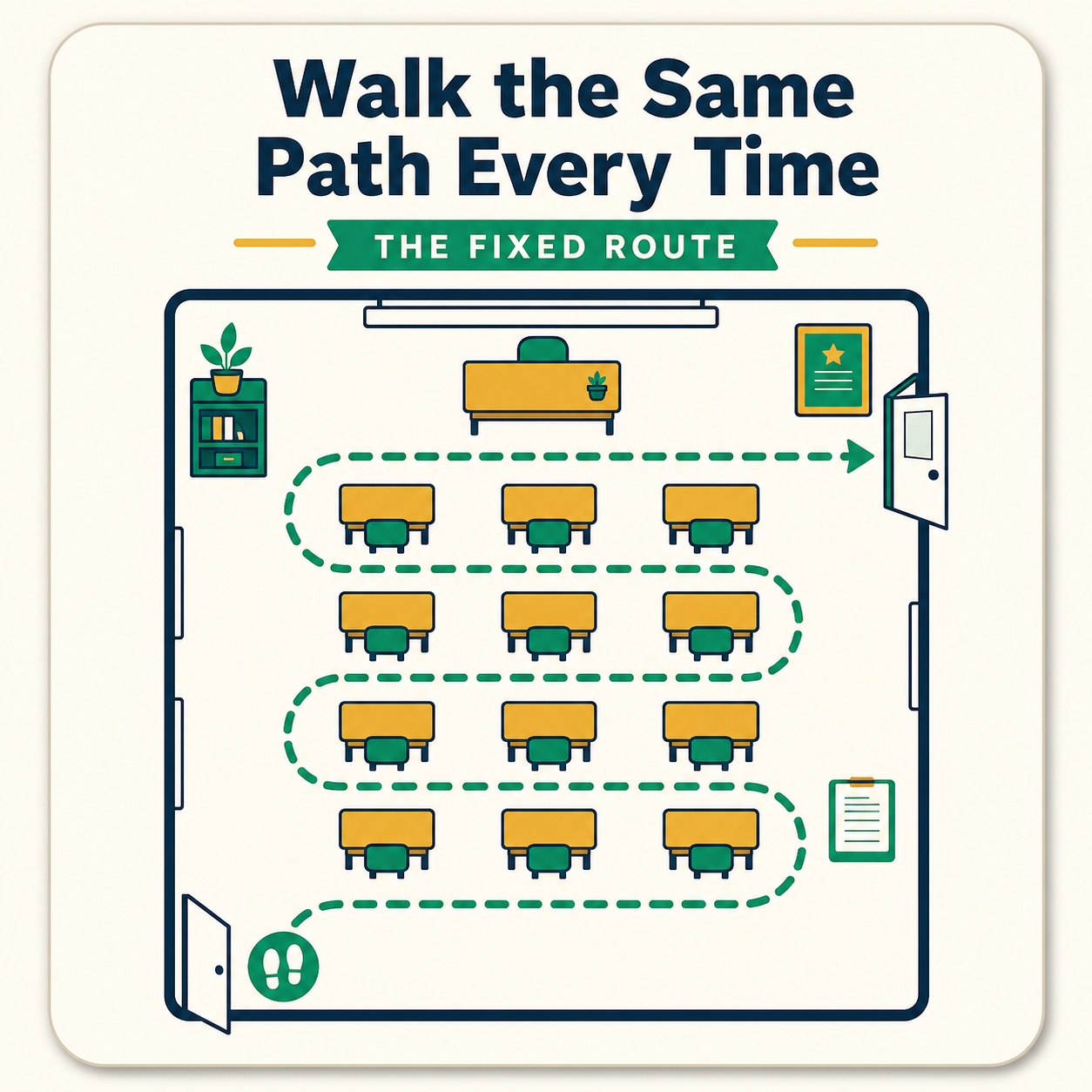
8. Walk the same predictable route every time
A fixed path through the room, used consistently, means every group knows you’ll pass near them at some point — which keeps every group accountable, not just the ones seated closest to your usual position.
9. Build in one mid-activity checkpoint
Roughly halfway through, a brief “freeze — show me your progress” moment lets you gauge how many groups are actually on task and catch any that have drifted, before the activity’s full time has already been lost.
Close the Activity Down Cleanly
10. Decide your transition back to whole-class before you start
Knowing in advance exactly how you’ll pull attention back — your stop signal, followed by a specific instruction like “eyes on me, pens down” — prevents the awkward, noisy few minutes where an activity has technically ended but the room hasn’t caught up.
11. Always debrief, even briefly
Skipping straight to the next task without addressing what groups produced teaches students that the output didn’t actually matter — which quietly undermines effort on the next group task. Even 90 seconds of “what did group three come up with?” closes the loop.
Where the timing is already worked out
Every lesson plan in the Smart English Worksheets Complete Pack already specifies exactly when an activity is pair work, individual work, or whole class, and for how long — so the structure above is already built into the lesson rather than something to design from scratch each time. A few sample lessons are free to try in the Worksheet Library.
Putting It Together
Group work stays controlled when the structure around it is as deliberate as the task itself — a concrete output, a clear volume reference, a visible timer, and a planned way back to whole-class attention. Start with a concrete output requirement and a visible countdown; those two changes alone noticeably tighten how a group activity feels within a single lesson.
The Textbook Directory can also help you find material already matched to your exact level and textbook, so group tasks stay aligned with what you’re actually teaching.
Give every group a concrete, checkable output rather than an open-ended discussion, explain the full task before groups are formed, state volume expectations as a specific reference point, and use a visible countdown timer rather than spoken time warnings.
Short, timed bursts of around 4-6 minutes tend to hold focus far better than one longer uninterrupted block — running two short rounds with a brief share-out between them generally keeps a class more on-task than a single 15-20 minute activity covering the same material.
Use one specific, consistent stop signal reserved only for that purpose — never reused for other instructions — so students immediately recognize what it means without needing a verbal explanation each time.
No — the noise and control issues in large classes come from how group work is set up and monitored, not from the format itself. A concrete output, a fixed monitoring route, and short timed segments make group work manageable even in classes of 40 or more.

The Teacher Bundle
A complete Record Book, Tracker, and bonus Lesson Planner — everything to plan, teach, and track your school year in one beautiful set.
Discover The Teacher Bundle →
Scan with your phone camera, then tap "Install" on the site to add it to your home screen.
Or open myteacher.ma on your phone