
How to Write a Lesson Plan Format for Moroccan English Classes (Free Template)
A clear, step-by-step guide to writing a proper lesson plan format for Moroccan English classes — what each section means and why, with a simple template you can reuse.
 By My Teacher
·
August 13, 2026
·
5 min read
By My Teacher
·
August 13, 2026
·
5 min read

Ask a new Moroccan English teacher what a lesson plan is supposed to look like, and you’ll often get an honest answer: nobody quite showed them. Teacher training covers methodology and theory extensively, but the actual physical format — what headings to use, what goes where, how detailed each section should be — is something many teachers piece together by trial and error in their first year.
This is that missing piece: a clear, reusable lesson plan format, with an explanation of what each section is actually for.
Why format matters, not just content
A consistent lesson plan format isn’t bureaucratic box-ticking — it’s what makes a plan quick to write, easy for an inspector or mentor to read at a glance, and genuinely reusable the next time you teach the same topic.
The Five Core Sections
Every well-structured lesson plan, regardless of level or topic, covers the same five things.
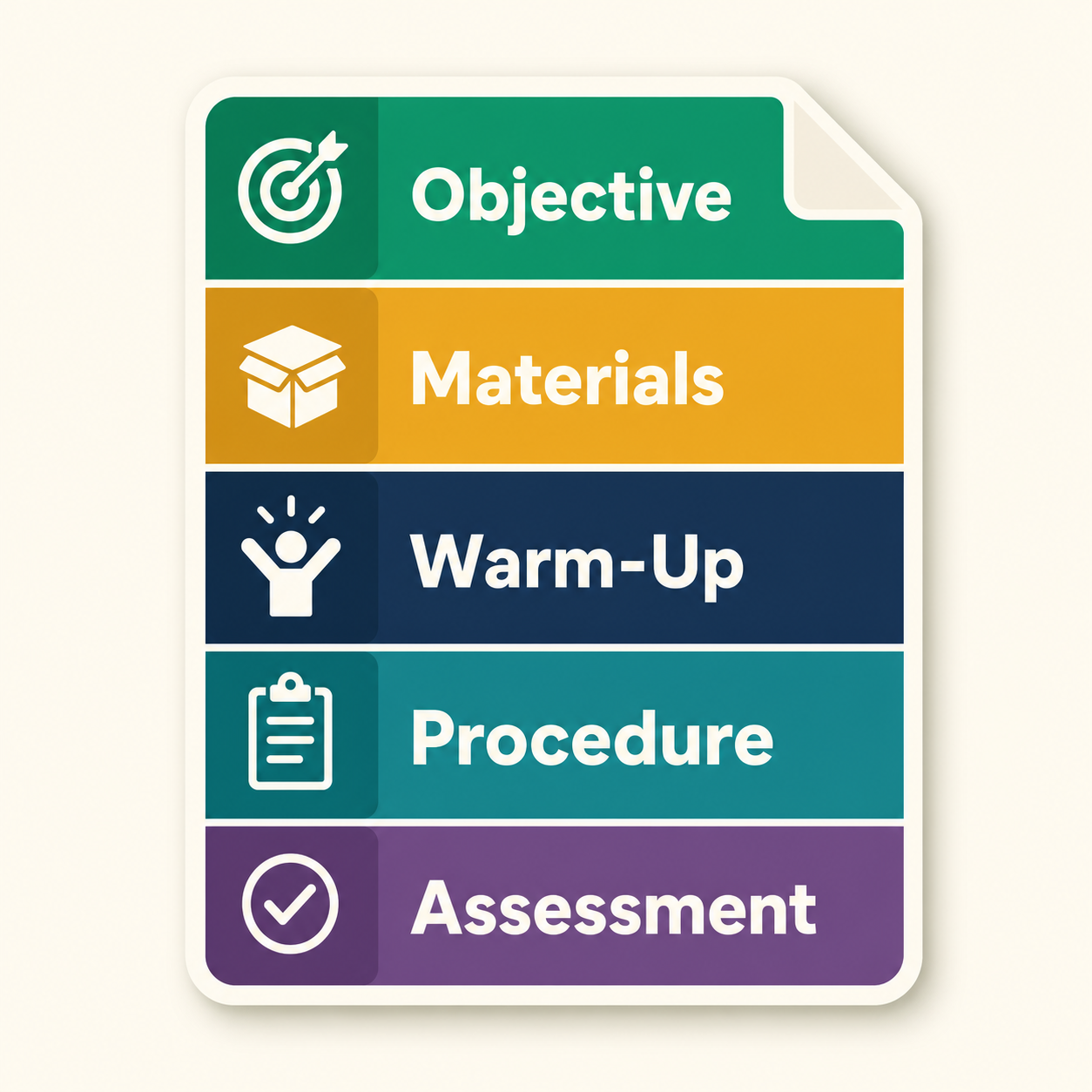
1. Objective
One clear, measurable sentence stating exactly what students will be able to do by the end of the lesson — not what the lesson is “about.” “Students will be able to use the past perfect tense in three original sentences” is a real objective. “Learn about the past perfect tense” is not.
2. Materials
A simple list of exactly what the lesson needs — textbook pages, board, any handouts. Writing this out explicitly, even briefly, forces you to notice gaps before you’re standing in front of the class needing something you don’t have.
3. Warm-Up
A short activity (3-5 minutes) that activates prior knowledge or gets students speaking English before the main lesson starts. This doesn’t need to relate directly to today’s topic — its job is simply to shift the room into English-speaking mode.
4. Procedure
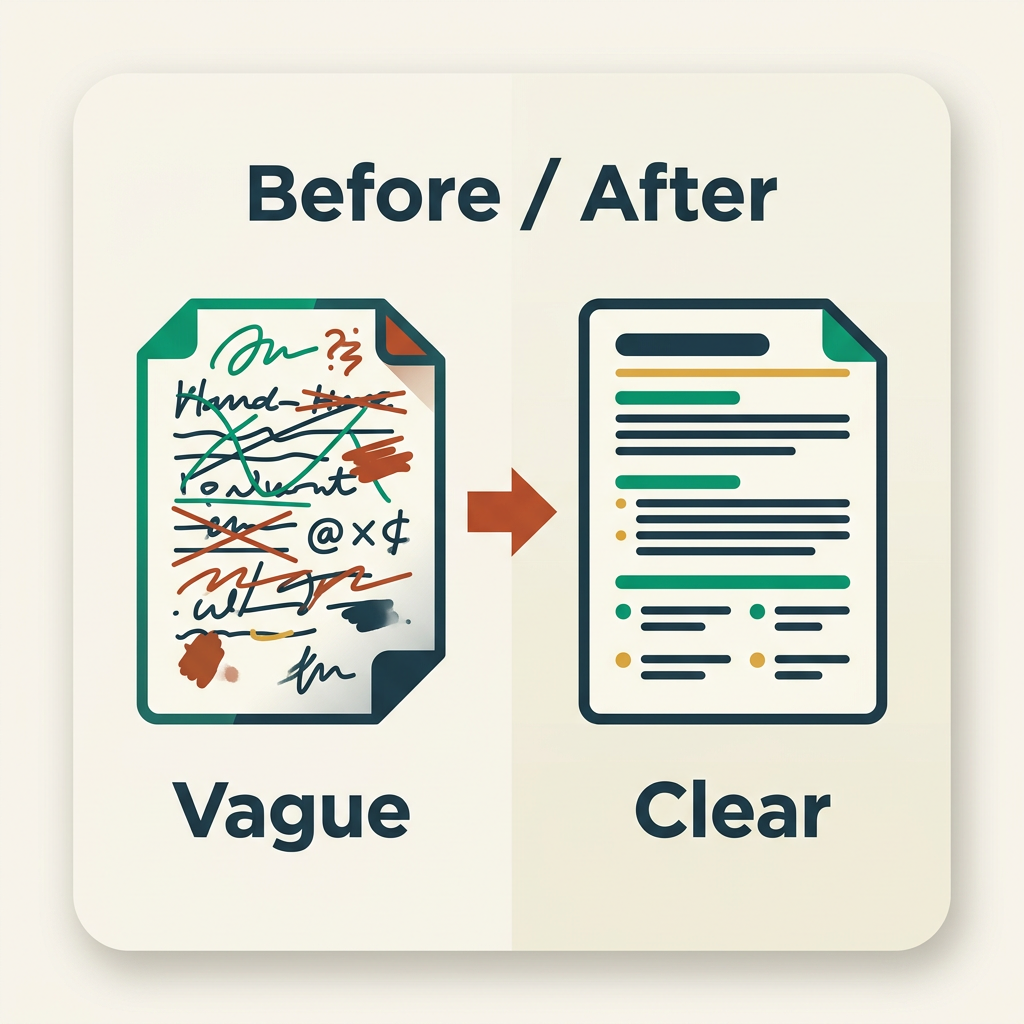
The core of the plan: the actual sequence of activities, usually broken into stages (introduce, practice, produce), each with a rough time allocation. This is the section that benefits most from being specific — vague procedure notes are the single biggest reason lesson plans feel useless when you go back to reuse them later.
5. Assessment
How you’ll check, even briefly, whether students actually met the objective — an exit ticket, a few cold-call questions, a quick written task. Without this section, you genuinely don’t know if the lesson worked.
Time-stamp your procedure section
Writing a rough time next to each stage (“Warm-up: 5 min,” “Practice: 15 min”) does more for classroom pacing than almost anything else in the plan — it’s the difference between a lesson that runs on time and one that suddenly has ten minutes left with half the material uncovered.
A Simple Template You Can Reuse
Lesson: [Topic] — [Level]
Time: 55 minutes
Objective: Students will be able to [specific, measurable skill].
Materials: [Textbook page / board / handout, etc.]
Procedure:
- Warm-up (5 min): [Activity]
- Presentation (10 min): [How new language/content is introduced]
- Practice (20 min): [Guided practice activities]
- Production (15 min): [Students use the language more independently]
- Assessment (5 min): [Quick check of the objective]
Adjust the timing, keep the structure
The specific minutes will shift depending on your class period length and the lesson type — a grammar-heavy lesson might need more practice time, a discussion-based one more production time. What should stay consistent across every lesson you write is the five-part structure itself.
This pairs naturally with the Standards-Based Approach
If you’re also working with SBA-style objectives, this format is exactly where that clear, measurable objective belongs — see our full guide on turning a curriculum standard into a proper lesson objective for more on that step specifically.
Putting It Together
A good lesson plan format isn’t about writing more — it’s about writing the right five things, every time, so planning gets faster the more you do it rather than staying just as slow as your first month of teaching.
If you’d rather start from lessons that are already fully written in this exact structure, the Teacher Bundle and Smart English Worksheets Complete Pack both follow this same format throughout.
Objective, Materials, Warm-Up, Procedure, and Assessment — every well-structured lesson plan covers these five sections, regardless of level or topic.
Specific enough to be measurable. “Students will be able to use the past perfect tense in three original sentences” works because you can check whether it happened. “Learn about the past perfect tense” doesn’t, because there’s nothing concrete to verify.
Yes — even a rough time estimate per stage significantly improves classroom pacing and helps you notice, while planning, if you’ve allocated too much or too little time to a given activity.
The five-part structure (objective, materials, warm-up, procedure, assessment) is a widely used general lesson-planning format, and it maps naturally onto what Moroccan schools and mentors typically expect to see in a submitted plan.
The Teacher Bundle
A complete Record Book, Tracker, and bonus Lesson Planner — everything to plan, teach, and track your school year in one beautiful set.
Discover The Teacher Bundle →
Scan with your phone camera, then tap "Install" on the site to add it to your home screen.
Or open myteacher.ma on your phone