
Free Outlook Common Core Lesson Plans: Unit 3 — Our Shopping Habits
Free downloadable Common Core lesson plans for Outlook Unit 3 — Our Shopping Habits. All 7 lessons: comparatives, shopping vocabulary, reading, and an inquiry letter writing task.
 By My Teacher
·
August 15, 2026
·
3 min read
By My Teacher
·
August 15, 2026
·
3 min read
Unit 3 of Outlook covers Our Shopping Habits — a genuinely relatable topic, paired with comparatives, one of the most useful grammar structures at this level. Below are all 7 free, ready-to-teach lesson plans covering the full unit.
All seven are free to download, aligned with the Common Core Standards-Based Approach.
What’s Included
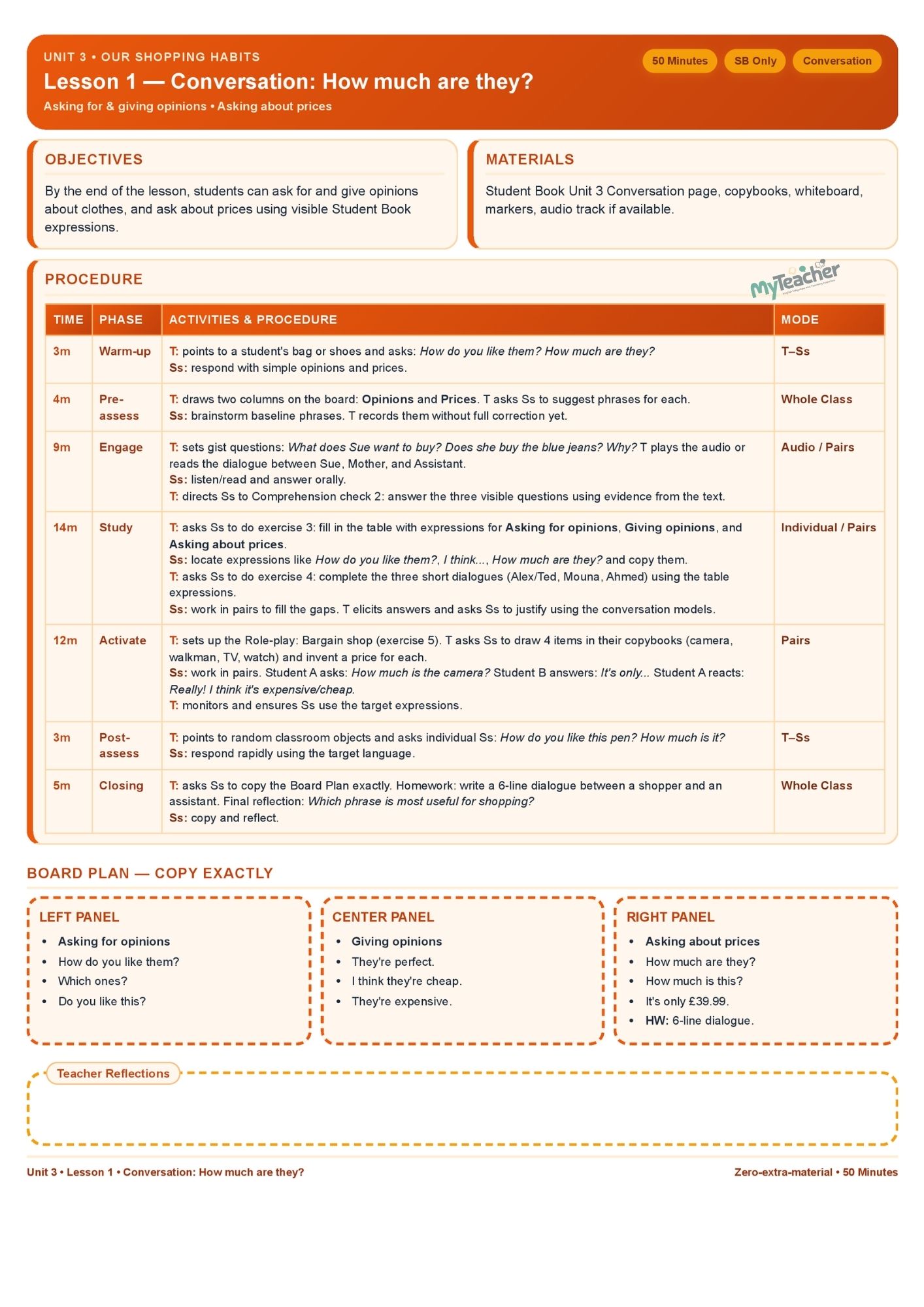
Lesson 1: Conversation — Asking for Opinions and Prices
Practical shopping dialogue: asking what something costs and what someone thinks of it.
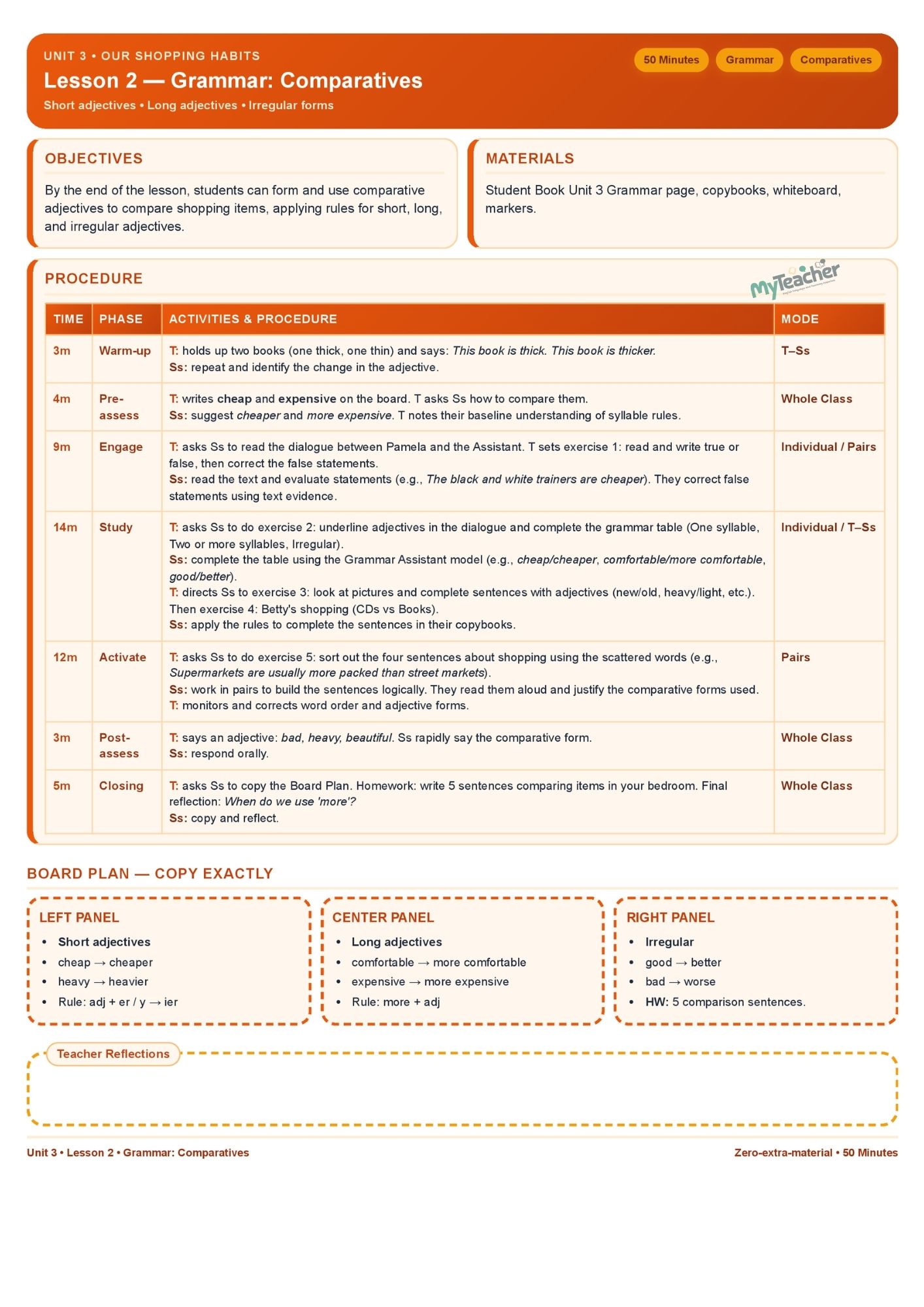
Lesson 2: Grammar — Comparatives (Adjectives)
The core structure for comparing prices, sizes, and quality — genuinely useful well beyond this unit.
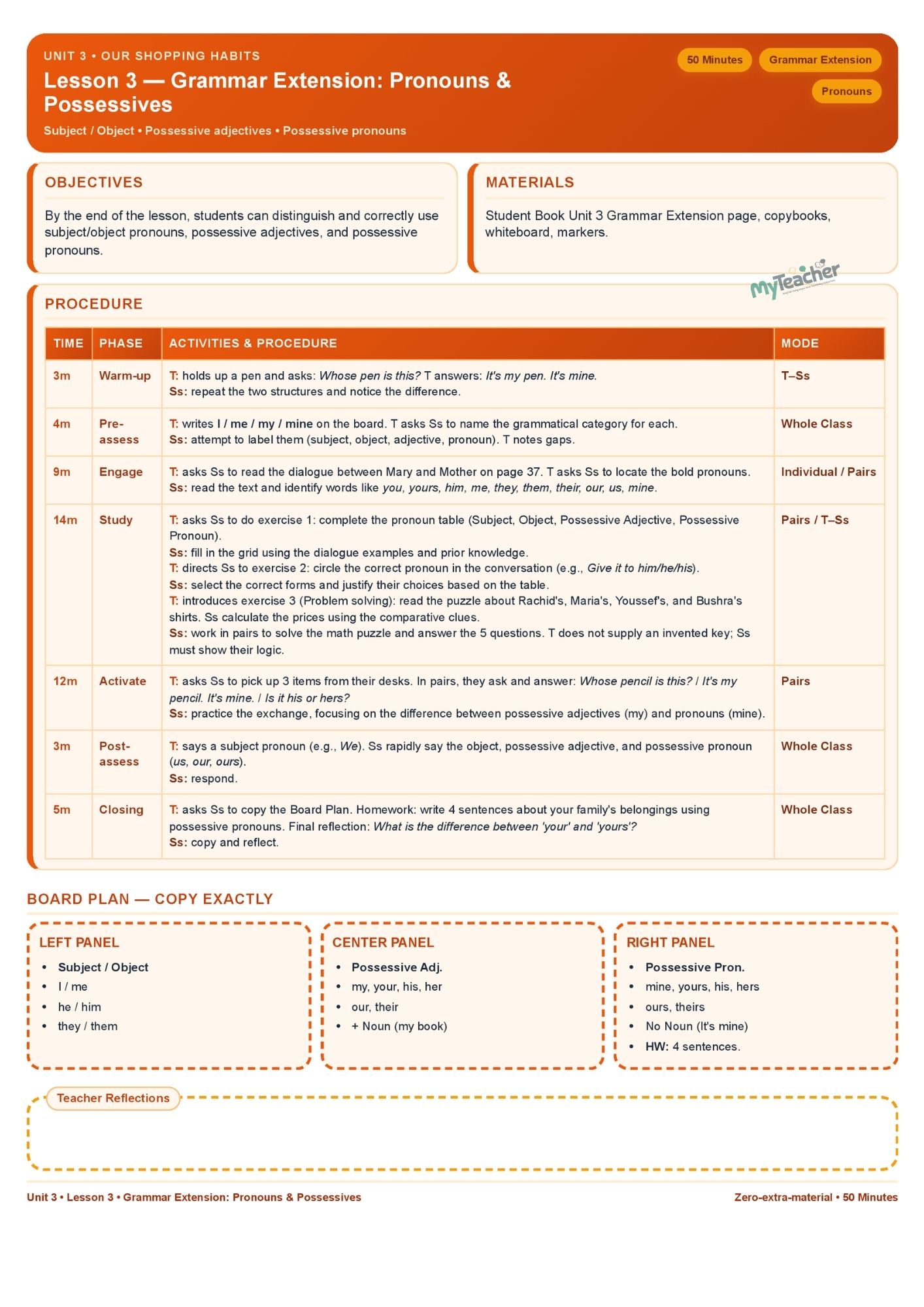
Lesson 3: Grammar Extension — Pronouns and Possessives
Reinforces pronoun and possessive use in the context of talking about belongings and purchases.
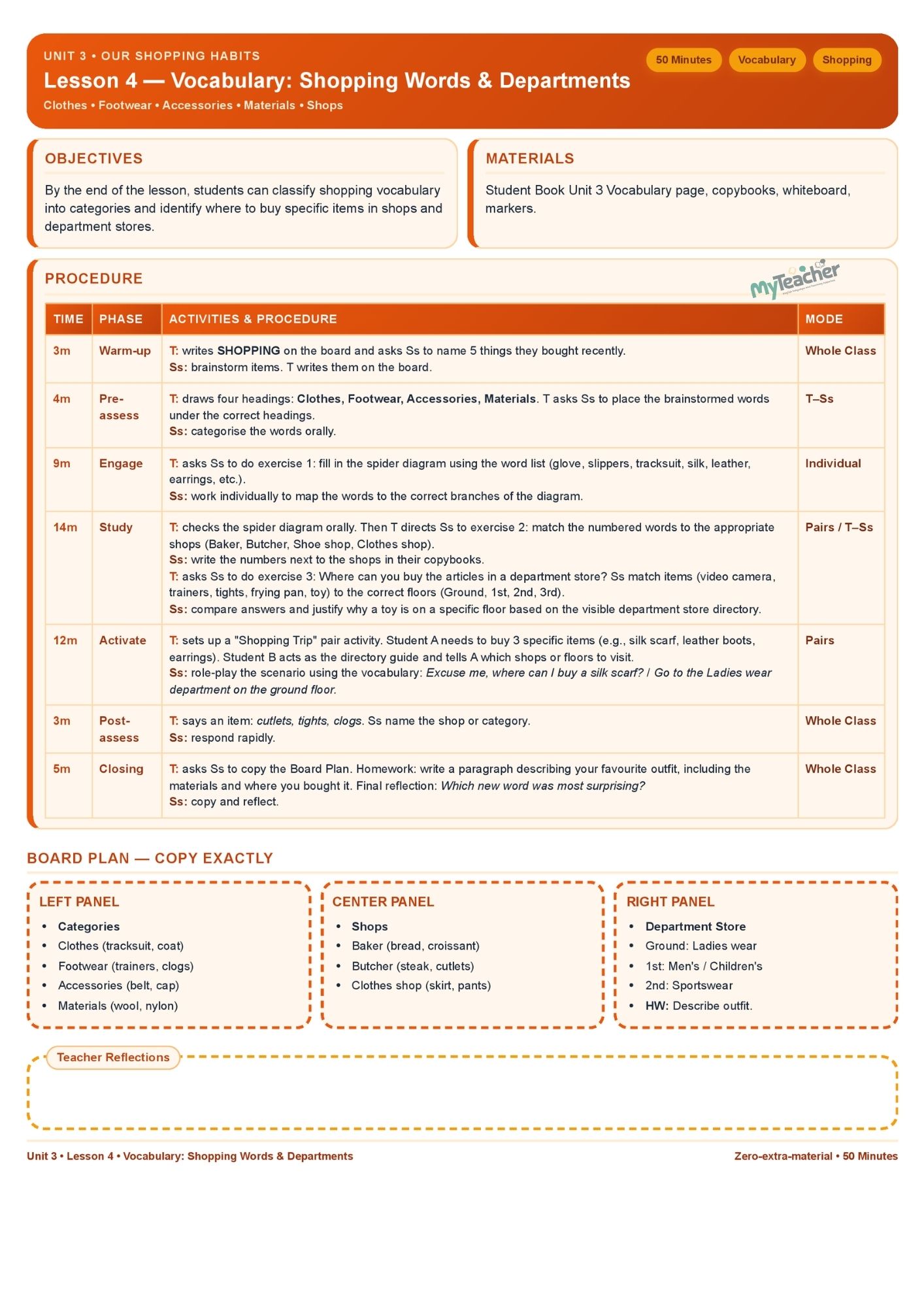
Lesson 4: Vocabulary — Shopping Words and Departments
The vocabulary bank for navigating shops, departments, and common shopping items.
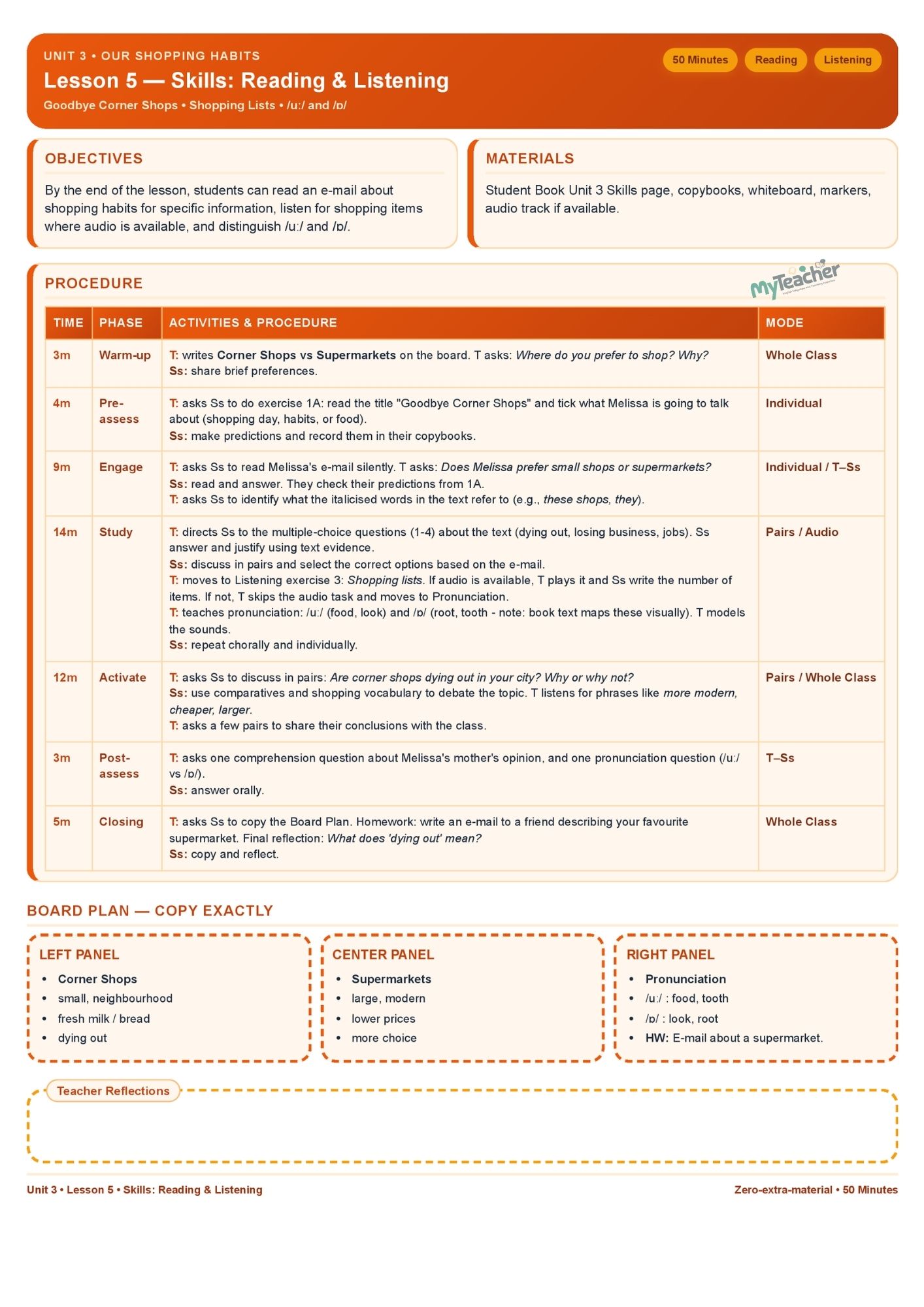
Lesson 5: Skills — Reading (“Goodbye Corner Shops”) & Listening
A reading passage on changing shopping habits, paired with listening practice.
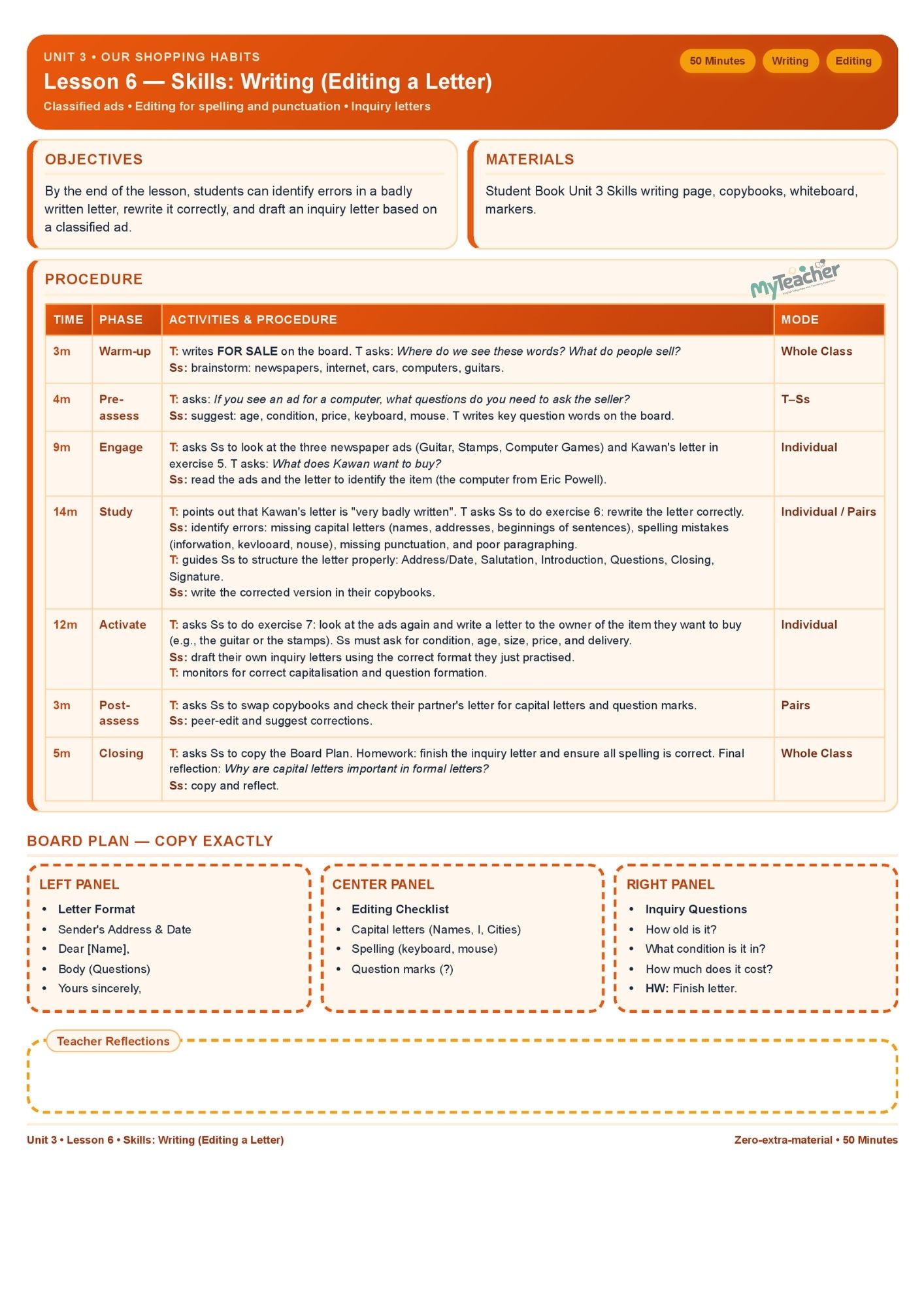
Lesson 6: Skills — Writing (Editing and Writing an Inquiry Letter)
Students edit a flawed example before writing their own simple inquiry letter — a genuinely useful writing format.
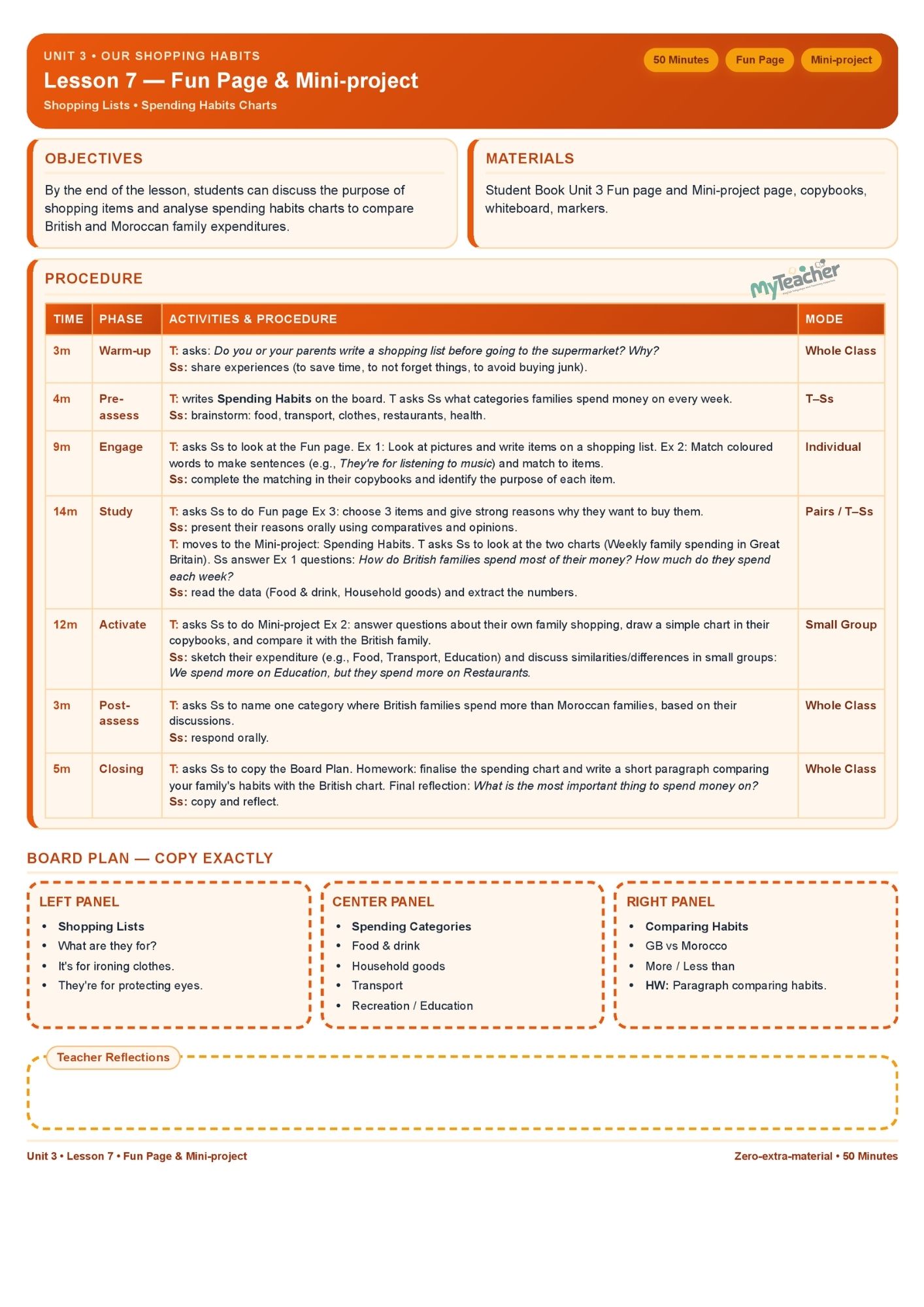
Lesson 7: Fun Page & Mini-Project — Shopping Lists & Spending Habits
A lighter closing lesson connecting the unit’s language to students’ own real spending habits.
Built around comparatives
Comparatives introduced here reappear constantly in later units and everyday English — this is one of the more transferable grammar points in the whole Common Core syllabus.
How to Use These in Class
Ground comparatives in real prices
Bring in (or write on the board) two or three real, familiar prices — even approximate ones from local shops — so comparative sentences (“This is cheaper than that”) feel concrete rather than abstract.
Use the editing step in Lesson 6 deliberately
Having students correct a flawed inquiry letter before writing their own is more effective than jumping straight to production — it gives them a checklist of what to avoid.
Connect the mini-project to real spending
Lesson 7’s spending habits activity lands better when students track or estimate their own actual weekly spending rather than a hypothetical example — it’s a small change that makes the language genuinely personal.
Download the Lesson Plans
All seven files are free to download individually.
⬇ Lesson 1: Conversation — Opinions & Prices
⬇ Lesson 2: Grammar — Comparatives
⬇ Lesson 3: Grammar Extension — Pronouns & Possessives
⬇ Lesson 4: Vocabulary — Shopping Words & Departments
⬇ Lesson 5: Skills — Reading & Listening
Looking for lesson plans for the other 9 Outlook units? See the full Outlook Common Core index. Also teaching Middle School? The Focus 9th Grade Library covers Spotlight-level lesson plans too.
Yes — all seven lesson plans for Unit 3 are free to download individually.
Comparative adjectives, along with a review of pronouns and possessives — structures genuinely useful for comparing prices, sizes, and quality well beyond this unit.
An inquiry letter — students first edit a flawed example, then write their own, giving them a concrete model to follow.
Yes — they follow the Outlook Unit 3 syllabus and the Moroccan Standards-Based Approach for Common Core.

Learning Journey — Complete Pack
71 worksheets and 71 matching lesson plans covering all 10 units, built directly from the Outlook curriculum.
Discover Learning Journey — Complete Pack →
Scan with your phone camera, then tap "Install" on the site to add it to your home screen.
Or open myteacher.ma on your phone